High Density Mobile Shelving for Archive Storage
SAS provides high density mobile shelving systems for archive rooms, records centers, government archives, medical records departments and institutional document storage areas.
By replacing multiple fixed aisles with controlled movable aisles, a high-density archive storage layout can increase usable shelving capacity while keeping records organized, accessible and secure. For room-by-room planning principles, review our mobile archive shelving room guide.
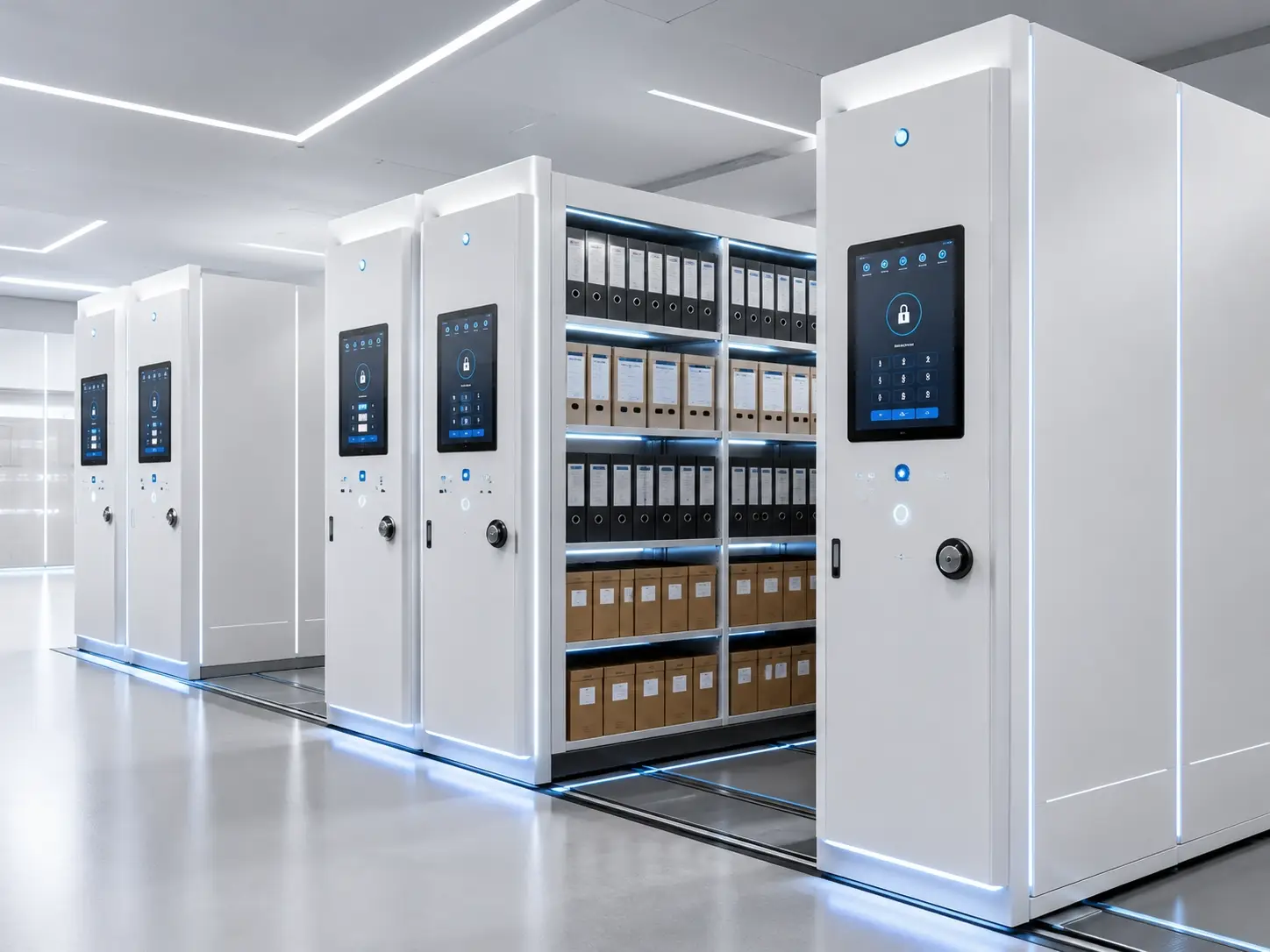
Why high density mobile shelving saves archive room space
Traditional fixed shelving needs several permanent aisles. High density mobile shelving keeps shelving rows compact and opens only the aisle needed for retrieval.
From permanent aisles to controlled working aisles
In a fixed shelving room, every row group normally needs its own aisle. In a mobile shelving system, rows are mounted on mobile bases and tracks, allowing the operator to open one selected aisle while the remaining rows stay compact.
This layout is especially useful for records centers, inactive archives, medical files, government archives and institutional document rooms where capacity pressure is higher than simultaneous aisle access.
- Reduce the number of permanent access aisles.
- Increase the proportion of the room used for shelving.
- Organize files by row, bay, shelf and archive category.
- Reserve future capacity according to annual archive growth.
Fixed Shelving Layout
High-Density Mobile Shelving Layout
Compare manual, electric and smart high density mobile shelving
The correct operation method depends on room size, daily retrieval frequency, security requirements, budget and the level of archive management required.
Archive high-density mobile shelving depends on more than shelf quantity
Before confirming a high density mobile shelving layout, the room, stored files, floor conditions and operating workflow should be reviewed together.
Room Dimensions
Clear length, width, height, columns, doors, service equipment and usable storage area define the starting layout.
Aisle Strategy
Working aisle width, number of open aisles and retrieval workflow affect both capacity and user convenience.
Shelf Configuration
Bay width, shelf depth, shelf spacing and shelf levels should match folders, binders, boxes or books.
Floor Loading
Stored paper, steel shelves, mobile bases and rail loads should be checked against the building condition.
Track Installation
Embedded, surface-mounted or raised platform rail methods depend on floor level, construction stage and site limits.
Access Control
Archives may require row locks, cabinet locks, controlled areas, password access or system authorization.
Safety Devices
Anti-tilt guidance, brakes, emergency stop, sensors and warnings are selected according to system type.
Future Capacity
Annual growth, retention period and expansion reserve should be considered before the room becomes full.
Which high density mobile shelving system fits the archive project?
Manual, electric and smart systems all support compact archive storage, but their operating method and management value are different.
Typical reference ranges for high density mobile shelving
The values below support preliminary discussion only. Final dimensions, loading, controls and rail method should be confirmed after reviewing the archive room and stored items.
Dense archive storage requires floor, rail and safety confirmation
High-density archive storage concentrates more files and steel equipment within the same room. Before production and installation, the building condition and operating safety should be checked carefully.
High-density archive storage for institutional records rooms
High density mobile shelving is most useful when file volume grows faster than available room space, especially in institutional and long-term document storage environments.
Send archive room data before confirming the high-density layout
A reliable high density mobile shelving proposal requires more than room area. SAS needs the stored material, required capacity, access frequency, floor condition, preferred operation method and delivery scope.
Room Information
Clear dimensions, drawings, photos, doors, columns, level differences and service equipment.
Archive Inventory
Folder, binder, box or book dimensions, current quantities, shelf length and annual growth.
Operation Mode
Manual, electric or smart operation, user numbers, retrieval frequency and access requirements.
Building Conditions
Floor loading, rail installation limits, power supply, fire clearance and installation responsibility.
High Density Mobile Shelving FAQ
What is high density mobile shelving?
How does mobile shelving increase archive storage capacity?
What is the difference between manual, electric and smart mobile shelving?
Can high density mobile shelving be installed in an existing archive room?
Does the floor need to be checked before installation?
What information is required for a high-density archive layout?
Continue planning the mobile shelving system
Use these pages to review product types, dimensions, configuration choices, safety features and application-specific records storage needs.
External reference: ISO 11799 document storage requirements can be used as a general reference for archive and library material storage conditions. SAS focuses on physical storage systems, mobile shelving layouts and project-based archive room solutions.
Send your archive room plan for a high density mobile shelving recommendation
Provide room dimensions, stored-item format, current quantity, annual growth, retrieval frequency, confidentiality requirements, preferred operation method, floor information and destination country. SAS will help compare suitable high-density archive storage layouts.