Medical Records Storage Solutions for Hospitals and Healthcare Facilities
SAS provides project-based medical records storage solutions for hospitals, clinics, laboratories, rehabilitation facilities, medical universities and centralized healthcare archives.
Medical file cabinets, archive cabinets and high-density mobile shelving can be combined according to record status, retrieval frequency, confidentiality and available archive-room capacity.
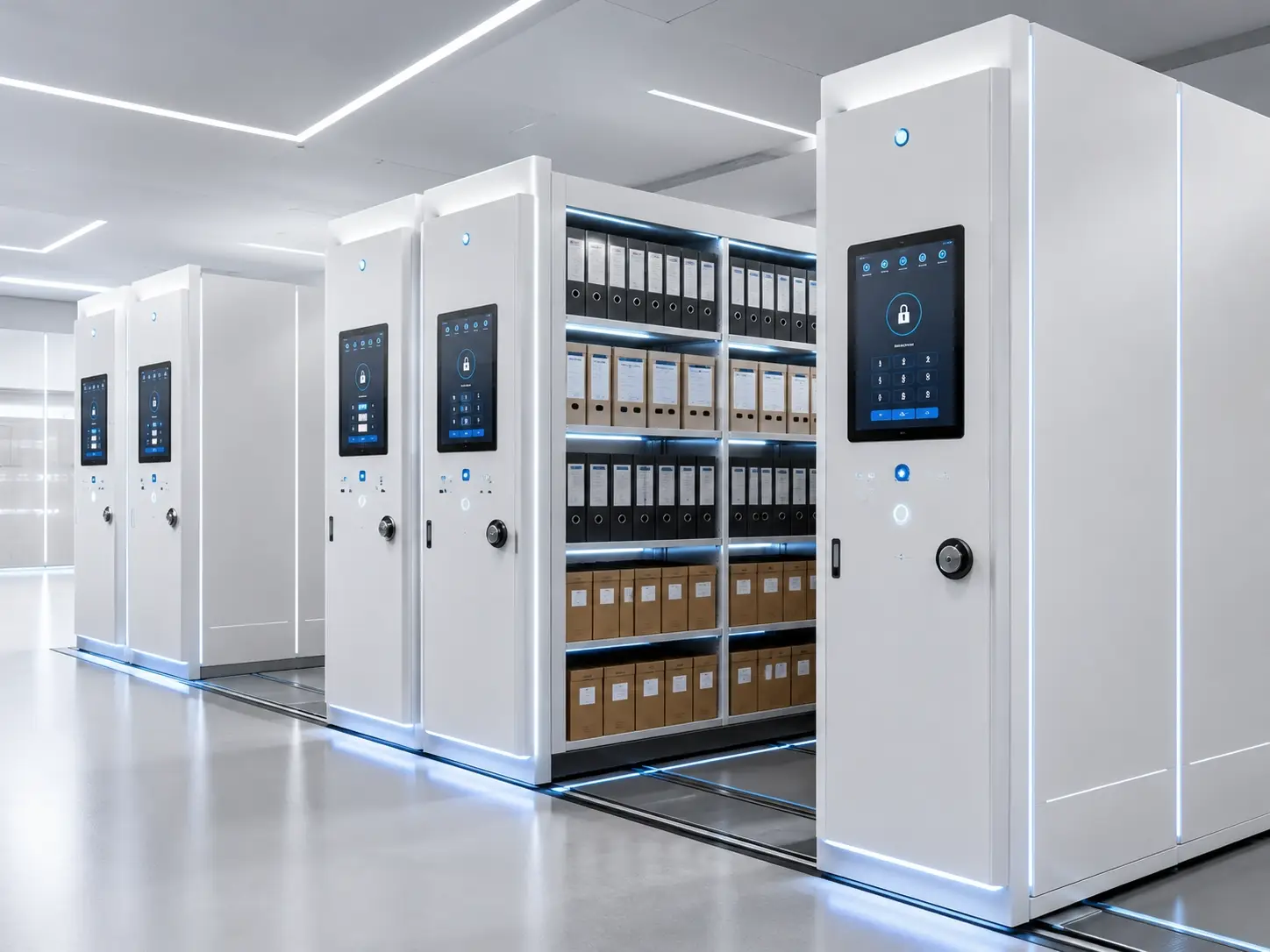
Medical File Storage for Active, Semi-Active and Long-Term Records
An effective medical filing system classifies documents by retrieval frequency, department, confidentiality, retention status and physical format.
Frequent Retrieval
Active Medical Records
Current inpatient files, outpatient records, treatment documents and frequently used clinical information.
Periodic Review
Semi-Active Records
Recently discharged files, completed treatment records and departmental healthcare archives.
Extended Retention
Long-Term Medical Archives
Historical patient files, research archives, surgical records and retained institutional documents.
Balance retrieval speed, confidentiality and long-term capacity
Hospital archives often contain high file volumes, mixed formats, restricted information and demanding room-management conditions.
Growing record volume
New patient files spread across departments and unsuitable storage areas.
Mixed active and inactive files
Older records consume valuable working space and slow daily retrieval.
Confidential information
Sensitive records may require locks, restricted rooms and user authorization.
Limited archive-room area
Permanent aisles in fixed shelving reduce usable storage capacity.
Different record formats
Folders, binders, boxes and films require different shelf dimensions.
Cleaning and preservation
Dust, ventilation, humidity and water-leak risks affect long-term storage.
Combine medical filing systems for daily files and centralized archives
Effective medical records storage solutions rarely depend on one cabinet type. Medical records file cabinets, archive cabinets and mobile shelving can be combined according to retrieval frequency, security requirements, archive volume and available space.
Medical Records File Cabinets
Lockable vertical, lateral, drawer and hanging-file cabinets for outpatient records, nursing files and frequently retrieved folders.
Medical Archive Storage Cabinets
Adjustable shelves and lockable doors for semi-active patient records, laboratory documents and confidential healthcare archives.
Manual Mobile Shelving
Handwheel-operated shelving reduces permanent aisle space without complex controls.
Electric Mobile Shelving
Motorized rows, safety sensors and aisle lighting support frequent daily use.
Smart Medical Records Storage
Touchscreen control, passwords, cards, RFID and user permissions can be integrated.
One medical records storage solution can include several filing systems
Hospitals and clinics can assign different products to active files, protected departmental records and long-term centralized archives.
Assign record ownership before assigning shelf space
Clear classification reduces misplaced files, uncontrolled access, duplicate storage and incorrect disposal.
Classification Fields
Convert medical file growth into shelf length and reserve capacity
Capacity planning is a critical part of medical records storage solutions. Folder quantity, average file thickness, annual growth, retention periods, archive-box dimensions and aisle configuration all affect the final storage capacity.
Measure current records
Count folders, boxes, binders and existing shelf length.
Classify record categories
Divide files by department, year, confidentiality and retention.
Estimate annual growth
Include projected patient volume and future expansion.
Review floor loading
Mobile shelving may require structural verification.
Coordinate receiving, active files, mobile rows and confidential storage
The archive room should support verification, registration, classification, retrieval, return, inspection and cleaning.
Typical Functional Sequence
The final arrangement depends on room dimensions, doors, columns and workflow.
Receiving and Sorting
Incoming files are verified, registered, labeled and classified.
Active Patient Files
Frequently used records remain near staff workstations.
Central Mobile Shelving
Older files use high-density storage with clear row and shelf codes.
Confidential Storage
Sensitive records use restricted cabinets or archive zones.
Manual, electric or smart shelving for medical records?
Protect patient information by cabinet, zone and user permission
Plan the archive room for inspection and preservation
From room drawings to installation and handover
SAS develops medical records storage solutions through a project-based process, beginning with archive-room dimensions, record classification and capacity calculations, followed by layout confirmation, production, installation and testing.
Requirement Collection
Review room dimensions, record categories, growth and confidentiality.
Capacity Calculation
Convert file quantities into shelf length and cabinet quantities.
Preliminary Layout
Plan active files, mobile rows, restricted zones and future expansion.
Technical Confirmation
Confirm dimensions, loading, locks, controls and safety.
Production and Inspection
Manufacture, inspect, identify and pack products by room sequence.
Installation and Handover
Verify movement, locking, stopping, alignment and user operation.
Medical Records Storage Solutions FAQ
What is a medical filing system?
Which medical file storage system is suitable for hospitals?
Can medical records file cabinets be locked?
How can a hospital increase archive capacity?
Continue planning the healthcare archive system
Planning a medical records storage project?
Send your archive-room dimensions, floor plan, patient-file quantity, record format, department structure and access-control requirements. SAS will help develop suitable medical records storage solutions, including capacity planning, product combinations and a preliminary room layout.