Steel Archive Storage Cabinet for Secure Document Organization
Lockable steel cabinets with adjustable shelves for folders, binders, archive boxes and controlled office records. Cabinet size, door structure, internal layout, color and export packing are confirmed around the project.
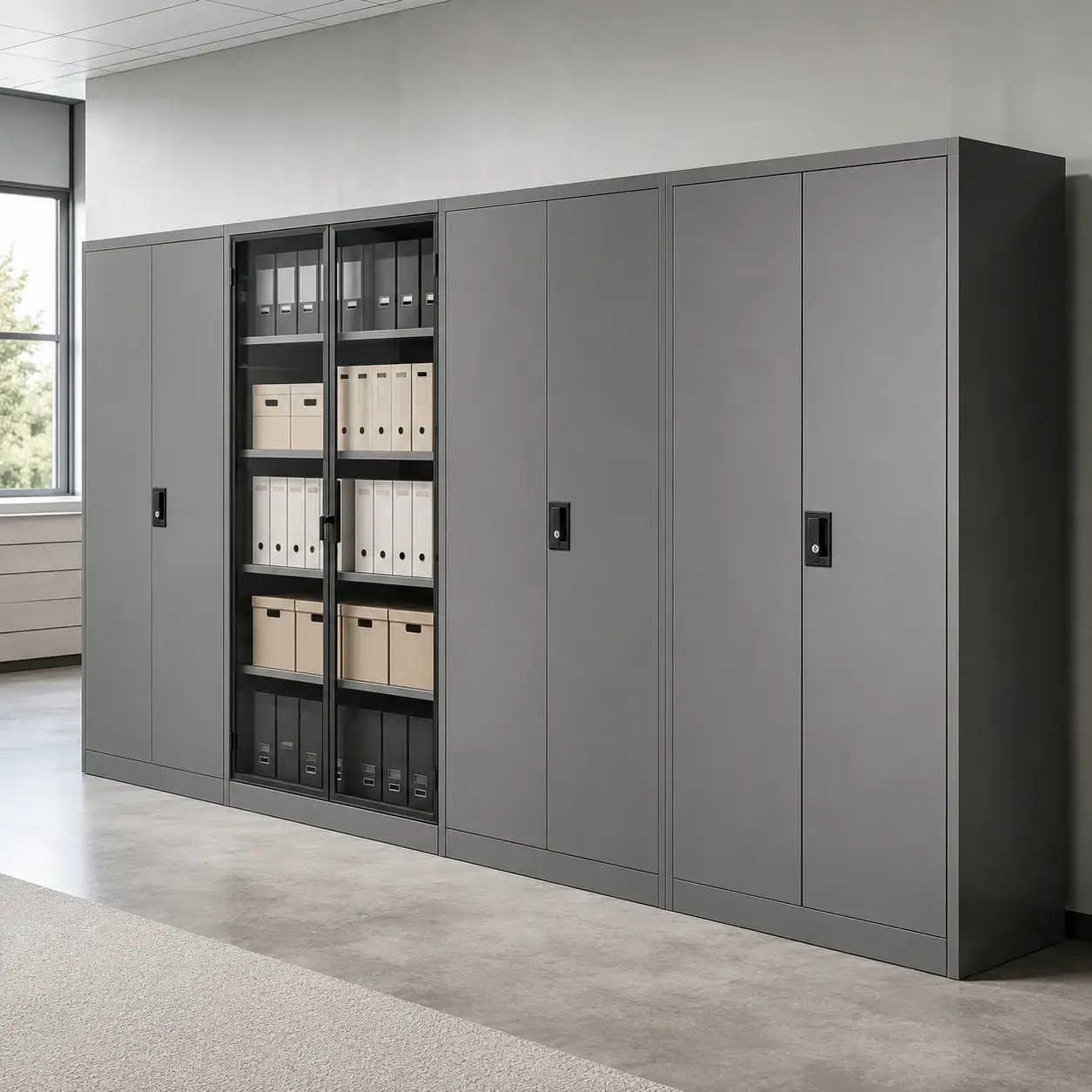
Internal depth, shelf spacing, door clearance and lock level should follow the document format and operating routine.
Control dust, access and document classification within one cabinet system
Steel archive storage cabinets provide enclosed organization for active records and long-term files. They can be installed individually, arranged in wall runs or combined with mobile shelving in a complete archive room.
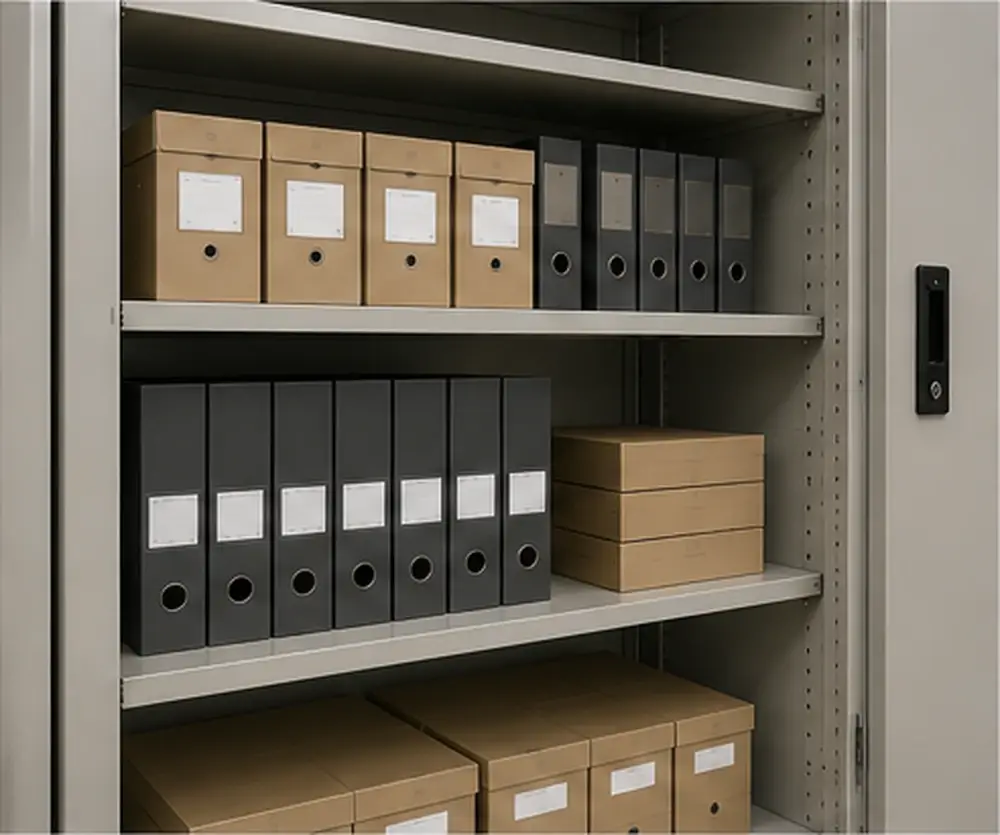
Internal layout should follow the file format
Full-width shelves, vertical dividers, drawers and internal lock boxes can be considered when different record types must be stored in one cabinet.
Main components that determine daily performance
Cabinet body and reinforcement
Folded cold-rolled steel panels and correctly positioned reinforcement help the cabinet remain square, aligned and stable.
Adjustable shelves and supports
Shelf levels can be repositioned around binder height, archive-box dimensions and required loading.
Door movement and clearance
Swing, sliding, glass and combination structures should match aisle width, visibility and access frequency.
Lock, handle and access level
Mechanical locks, master-key arrangements and selected electronic options can be reviewed for different management levels.
Pretreatment and powder coating
Cleaning, surface pretreatment and uniform coating support practical corrosion resistance and a consistent indoor finish.
Cabinet dimensions alone do not define a reliable specification
Stored-item size, shelf loading, door clearance, lock control, assembly method and export packing should be reviewed together.
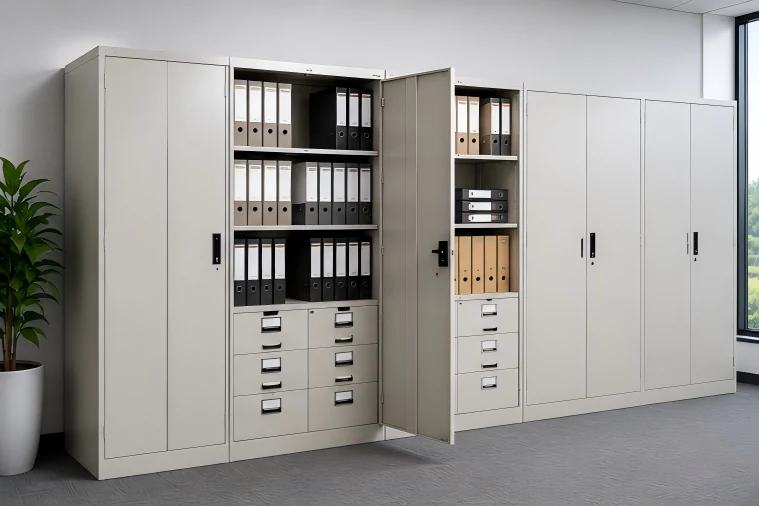
Choose the cabinet type by access, clearance and stored material
Different door and internal structures solve different storage problems. The configuration should follow front clearance, file format, security level and daily operating frequency.
Swing-Door Cabinet
Direct access to the full internal width where sufficient door-opening clearance is available.
Sliding-Door Cabinet
Reduced front clearance for narrow aisles and continuous cabinet rows.
Glass-Door Cabinet
Visual identification of manuals, books and frequently used reference files.
Combination Cabinet
Steel doors, glass, open sections, drawers or compartments in one unit.
Custom Archive Cabinet
Dimensions, partitions, shelf spacing and lock configuration adjusted to the application.
Reference values for preliminary cabinet selection
These ranges support early discussion. Final dimensions, steel thickness, shelf load, lock type and packing must be confirmed against the selected cabinet structure and project conditions.
Send the stored-item type, required dimensions, quantity, loading demand and destination so SAS can confirm a practical specification before production.
Start with the documents, not only the cabinet size
A practical cabinet specification links document format, room clearance, access frequency, growth reserve, security level and shipment method.
Confirm stored items
Loose files, binders, archive boxes, hanging folders, drawings, books or mixed office materials.
Measure usable space
Wall length, ceiling height, depth, door clearance, aisle width and nearby columns or equipment.
Convert files into capacity
Binder quantity, archive-box quantity, linear shelf length and expected growth reserve.
Assess access frequency
Frequently used records should remain at comfortable operating heights and easy-access positions.
Define security control
Standard locks, individual access, master-key management or selected electronic options.
Select shipment construction
KD construction improves container use; assembled cabinets reduce on-site assembly work.
Steel archive cabinet or mobile shelving system?
Both products store records, but they solve different space and management problems. Many projects use cabinets for active departmental records and mobile shelving for centralized long-term archives.
Steel Archive Cabinet
Mobile Shelving System
Archive cabinets for active records and controlled document storage
Steel archive storage cabinet FAQ
Final cabinet dimensions, steel thickness, shelf load, lock configuration and packing are confirmed according to the selected structure and order conditions.
What material is used for an archive storage cabinet?
Archive cabinets are generally manufactured from cold-rolled steel sheet with a powder-coated finish. Final steel thickness and reinforcement depend on cabinet dimensions, shelf load and project requirements.
Are the internal shelves adjustable?
Yes. Most models can use adjustable shelf supports so the spacing can be changed for binders, files, archive boxes and other stored materials.
Can the cabinet be supplied with a lock?
Yes. Standard mechanical locks, master-key arrangements, combination locks and selected electronic options can be discussed according to the required access-control level.
What cabinet sizes are available?
Common reference ranges are approximately 1,800–2,000 mm high, 800–1,000 mm wide and 350–500 mm deep. Project dimensions can be discussed.
How much weight can each shelf hold?
Typical reference loading may be approximately 30–80 kg per shelf, depending on steel thickness, shelf design and support structure. The required load should be confirmed before production.
Are knock-down cabinets available for export?
Yes. Knock-down construction can reduce shipping volume. Panels, fittings, hardware and assembly instructions are packed according to the selected structure.
Need a steel archive storage cabinet quotation?
Send the cabinet type, dimensions, shelf quantity, lock type, color, order quantity, packing preference and destination country. SAS will confirm a suitable configuration and quotation basis.