Public-Sector Records Management

Government Archive Storage Solutions for Secure Records Management

SAS provides government archive storage solutions for government agencies, municipal departments, courts, land and planning offices, tax authorities, education bureaus and public institutions. Manual, electric and smart mobile shelving can be combined with archive cabinets and filing cabinets according to capacity, security and access requirements.

High-Density Storage
Controlled Access
Archive-Room Planning
Future Expansion

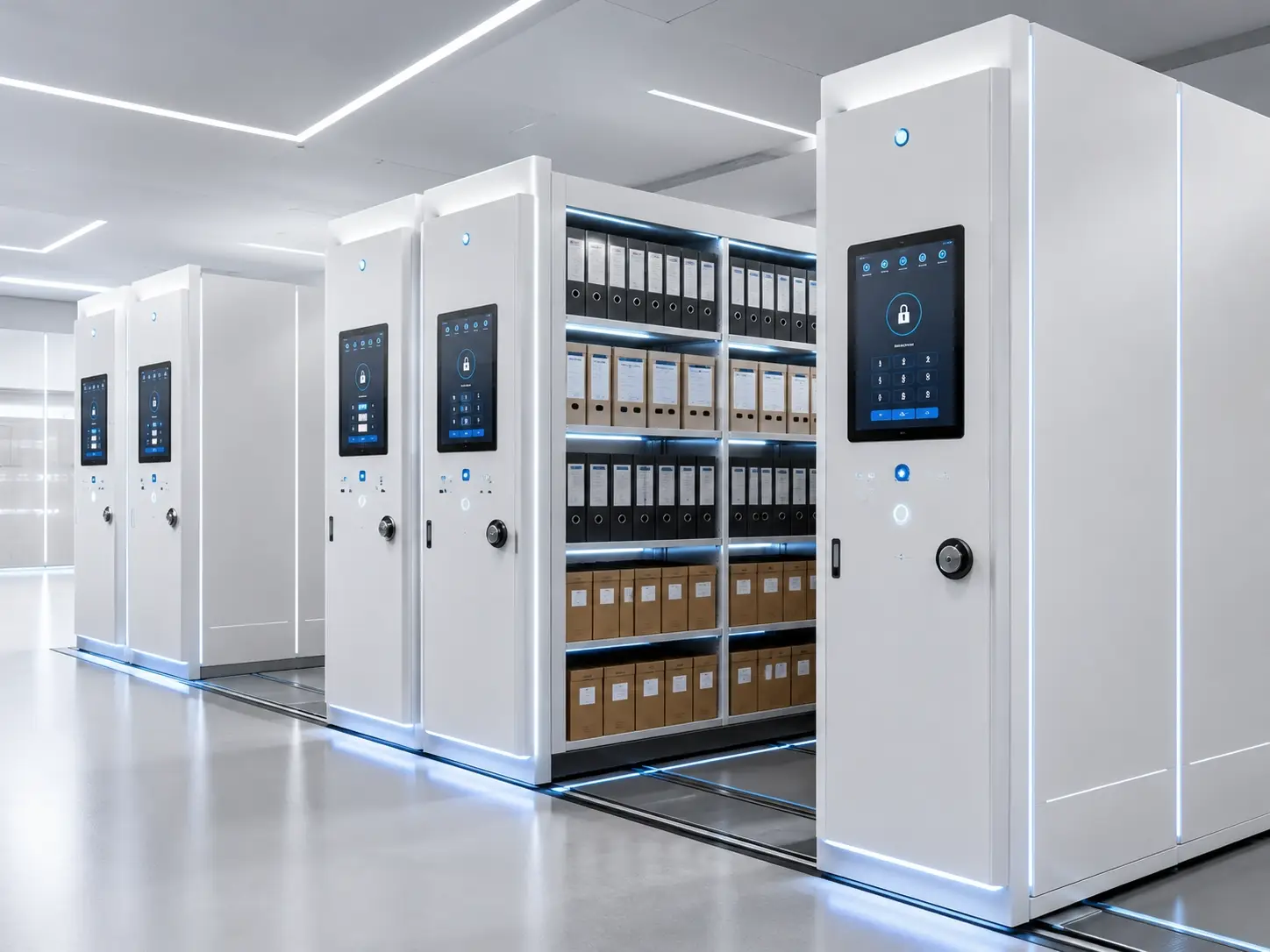
Government archive storage solutions with smart mobile shelving and safety lighting

Plan capacity, security and workflow together
The right government archive solution combines record classification, room capacity, access permissions, safety functions and long-term growth.

Manual / Electric / SmartSystem selected by budget and management level
40–100 kgTypical shelf-load reference
5–8 levelsCommon archive-shelving configuration
Project-based layoutCapacity and aisle planning by room conditions

Secure Public-Sector Records

Government Archive Storage Solutions for Long-Retention Public Records

Government records often remain in storage for many years while still requiring traceable retrieval. The archive system should protect documents from dust, handling damage and unauthorized access without making daily operations unnecessarily complex.

Frequently used files may remain in filing cabinets or accessible archive cabinets. Large volumes of inactive records can be transferred to mobile shelving to improve floor-space efficiency and centralized control.

Administrative and personnel records
Financial and tax documents
Land and planning files
Court and legal records
Education and public-service files
Historical and bound registers

High-density archive rows
Controlled aisle access
Expandable project layout

Common Archive Challenges

Government storage projects must solve more than a shortage of shelves

Space, record formats, security, retention time, access frequency and growth all affect the correct system selection.

01

Limited room capacity

Records continue to accumulate while the archive room remains unchanged. Mobile shelving reduces the number of permanent aisles.

02

Mixed record formats

Archive boxes, folders, registers, maps and drawings require different shelf depths, spacing or dedicated storage units.

03

Security and access

Confidential files may require row locks, cabinet locks, passwords, cards, RFID or user-based authorization.

04

Long retention periods

Shelving structure, coating, labeling and load capacity should support many years of organized indoor storage.

05

Frequent retrieval

High-use records should remain close to entrances, sorting areas or staff work zones to reduce unnecessary movement.

06

Future archive growth

The initial layout should include reserve capacity or allow phased extension rather than filling every shelf immediately.

Recommended Storage Combination

Use different systems for active, confidential and long-term records

A complete government archive often combines mobile shelving, archive cabinets and filing cabinets instead of relying on one product for every record category.

Cost-Effective Density

Manual Mobile Shelving

Handwheel or mechanical movement provides high-density storage without complex electrical controls. It offers a practical balance between capacity, cost and daily operation.

Best fit: departmental archives, municipal records and general administrative storage.

Motorized Operation

Electric Mobile Shelving

Motorized row movement, local controls, emergency stops, light barriers, aisle lighting and overload protection can support medium and large government archives.

Best fit: high-use record rooms and projects requiring easier operation.

Digital Management

Smart Mobile Shelving

Touchscreen control, user authorization, RFID, LED position indication, operation records and environmental monitoring can be integrated according to project scope.

Best fit: controlled archives and institutions planning digital records management.

Enclosed Storage

Archive Storage Cabinets

Lockable steel cabinets support active departmental records, confidential files, bound registers and smaller document groups that require enclosed protection.

Best fit: offices, restricted categories and frequently accessed records.

Daily Administration

Steel Filing Cabinets

Drawer systems and hanging-file rails support personnel, finance, legal and other active records that require frequent categorized access.

Best fit: HR, finance and administrative departments.

System Comparison

Manual, electric or smart mobile shelving?

The correct option depends on room size, record quantity, user frequency, security needs, project budget and the organization’s management process.

Comparison Item
Manual
Electric
Smart
Operation
Handwheel or mechanical drive
Motorized movement
Digital and intelligent control
Project budget
Lower
Medium
Higher
Access control
Mechanical options
Electrical control options
User-based authorization
Safety functions
Mechanical protection
Sensors and emergency stop
Integrated monitoring
Management software
Not normally required
Optional
Commonly integrated
Typical project
Small to medium archives
Medium to large record rooms
Controlled digital archives

Capacity Planning

Convert records and future growth into shelf length and room capacity

Counting boxes alone may be misleading because box dimensions and folder thickness vary. Linear shelf length, record categories and annual growth provide a stronger planning basis.

01

Measure the current archive quantity

Use archive boxes, binders, files, record categories and linear shelf length to describe the existing collection.

02

Classify records by access frequency

Separate active, occasional, inactive, confidential, oversized and historical records before assigning storage systems.

03

Calculate future growth

Include annual additions, retention periods, disposal cycles, reserve capacity and possible department expansion.

04

Confirm archive-box and file dimensions

Shelf depth and spacing should support the actual box base, folder height and binder depth without unsafe overhang.

05

Review floor capacity

High-density shelving concentrates weight. Floor structure, allowable load and track distribution should be confirmed.

06

Compare fixed and mobile layouts

Fixed shelving keeps multiple aisles open. Mobile shelving reduces permanent aisles and can increase capacity within the same room.

Archive Room Layout

Coordinate receiving, high-density storage, secure zones and staff work areas

A government archive room should support document receiving, classification, retrieval and return—not only the maximum number of shelving rows.

Receiving and sorting areaSupports checking, registration, box labeling, temporary placement and returned-file processing.
High-density mobile zoneStores large volumes of long-term records within planned operating aisles.
Cabinet and secure zonesActive or confidential records remain in lockable cabinets or restricted shelving areas.
Staff work areaFrequently accessed categories should remain close to desks, entrances and circulation points.

Record-Specific Configuration

Different government records require different shelf structures

Archive boxes, bound registers, drawings and confidential files should not be forced into one universal shelf specification.

Archive boxes and foldersAdjustable shelf spacing, suitable depth, dividers and book supports for stable vertical storage.
Bound registersStronger reinforcement, lower shelf positions and confirmed loading for heavy volumes.
Drawings and mapsFlat drawers, wider shelves, rolled-document storage or dedicated drawing cabinets.
Confidential recordsLockable cabinets, restricted rows, smart access control or separate archive zones.

Safety and Access Control

Protect people, documents and authorized access during daily operation

Movement Safety

Anti-tilt and braking

Guide rails, anti-tilt structures, base reinforcement, mechanical brakes and controlled movement support stable operation.

Sensor Protection

Light barriers and anti-pinch

Electric and smart systems can stop movement when a person or object is detected in the aisle.

Emergency Control

Emergency stop and overload

Accessible emergency-stop controls and overload protection help stop the system under abnormal resistance.

Access Permission

Password, card and biometric options

Authorized access can be managed through passwords, cards, selected biometric methods or project-specific smart controls.

Archive Identification

RFID and location management

RFID integration can support record identification, shelf-location management and controlled retrieval.

Audit Trail

Operation records

Selected systems can record user identity, access time, opened aisle, alarms and system events according to software scope.

Archive Environment

Coordinate shelving with preservation conditions inside the room

Archive preservation also depends on temperature, humidity, ventilation, dust prevention, fire protection, water-leak control and cleaning procedures.

Temperature and humidityRoom control or selected smart sensors can support environmental monitoring.
Smoke and fire systemsShelving layout should respect detectors, suppression equipment and emergency routes.
Water-leak preventionKeep vulnerable records away from water sources and coordinate leak detection where required.
Ventilation and cleaningAllow practical airflow, dust control and maintenance access around shelving rows.

Project Workflow

From archive data and room drawings to installation and handover

Requirement collection

Review room dimensions, floor plan, record types, quantity, growth, security and preferred system.

Capacity calculation

Convert record quantity into shelf length, shelving bays, row quantities and reserve capacity.

Layout development

Plan tracks, rows, aisles, work zones, cabinet locations, clearances and expansion areas.

Technical confirmation

Confirm dimensions, loading, drive type, controls, safety features, locks, color and installation scope.

Production

Manufacture frames, shelves, bases, tracks and control components according to the confirmed specification.

Inspection and packing

Check movement parts, label packages and organize components by row and installation sequence.

Delivery and installation

Installation may be completed by SAS, a local partner, the customer team or the project contractor.

Testing and handover

Verify movement, locking, safety stopping, lighting, controls, alignment and user operation.

Government Archive Applications

Storage solutions for different public-sector record categories

Municipal Archives

Administrative files, local-government records and long-term public documents.

Land & Planning

Land records, planning files, maps, drawings and project documentation.

Tax & Finance

Tax files, payment documents, audit records and financial reports.

Courts & Legal

Case files, legal documents, evidence records and restricted materials.

Human Resources

Personnel files, employment records, retirement documents and confidential records.

Education Authorities

School records, student files, teaching documents and administration archives.

Public Security

Controlled case files, administrative documents and restricted records.

Government Record Centers

Centralized archive storage for multiple departments and long-term retention.

Typical Technical Reference

Preliminary ranges for archive-room system planning

Final dimensions, load capacity, drive method, controls, fixing and safety features should be confirmed according to room conditions and project requirements.

Main material
Cold-rolled steel with powder-coated surface
System type
Manual, electric or smart mobile shelving
Typical shelving height
Approximately 1,800–2,500 mm
Typical bay width
Approximately 800–1,000 mm
Shelf depth
Approximately 250–600 mm according to record format
Shelf levels
Commonly 5–8 adjustable levels
Shelf loading
Approximately 40–100 kg per shelf depending on structure
Drive method
Handwheel, electric motor or intelligent control
Track type
Surface-mounted or embedded according to floor and project design
Locking
Mechanical, electrical or user-authorized access
Safety options
Braking, emergency stop, sensors, overload and anti-pinch protection
Installation
Project-based installation and testing
Packaging
Export packing with row and component identification
These values are general references only. Final specifications should be confirmed after reviewing the archive room, record quantity, floor conditions and required management functions.

Manufacturing and Quality

Details that influence movement, alignment, loading and project handover

Tracks, bases and frame alignment

Accurate track and base production supports smooth movement, while stable frame connections maintain alignment under archive load.

Drive and safety testing

Manual drives, motors, sensors, emergency stops, brakes and anti-pinch devices should be tested before project handover.

Coating and component identification

Uniform powder coating supports indoor protection, while row, bay and package labels improve installation and maintenance.

Packaging and Project Delivery

Protect, identify and sequence components for large archive projects

Large shelving projects may include hundreds of frames, shelves, bases, tracks and hardware items. Packaging should support inventory checking and installation order.

Surface protectionFilm, bags and foam reduce scratches and dust.
Component groupingFrames, shelves, tracks and hardware are separated by type.
Control protectionMotors, panels and sensors receive separate impact and moisture protection.
Pallet or caseSelected according to route, order size and handling conditions.
Row identificationNumbered packages support site receiving and installation sequencing.

Quotation Checklist

Information required for a practical government archive quotation

When the final configuration is not yet confirmed, send the room plan, current record quantity, archive-box size and management requirements. SAS can prepare a preliminary solution.

Department or institution type
Archive-room dimensions and floor plan
Floor-loading information
Record type and box dimensions
Current quantity and annual growth
Manual, electric or smart system
Access, safety and monitoring functions
Installation, packaging and destination

Frequently Asked Questions

Government archive storage FAQ

What storage system is suitable for government archives?

Manual, electric or smart mobile shelving is commonly used for high-density archives. Steel archive cabinets and filing cabinets can be added for active, confidential or departmental records.

How much more storage can mobile shelving provide?

The increase depends on room shape, shelf dimensions and aisle requirements. Mobile shelving reduces permanent aisles and can provide substantially more storage than fixed shelving in many rooms.

Can the system store different record formats?

Yes. Shelf depth, spacing, dividers and special storage components can be configured for archive boxes, binders, registers, maps and other formats.

Are access-control functions available?

Yes. Mechanical locks, passwords, cards, master-key systems, RFID and selected smart-access functions can be considered.

Can the system record user operations?

Selected smart systems can record user access, operating time, opened aisles and system events according to the software scope.

Are safety sensors available?

Electric and smart systems can use light barriers, anti-pinch sensors, emergency stops and overload protection.

Can SAS help calculate archive-room capacity?

Yes. Provide the room dimensions, record quantity, archive-box size and annual growth for preliminary capacity planning.

Can the system be expanded later?

Expansion may be possible when reserve space, track layout and control capacity are considered during the initial project stage.

What floor information is required?

The project should confirm floor structure, allowable loading, track arrangement and whether reinforcement may be required.

Can government archives use both cabinets and mobile shelving?

Yes. Cabinets can store active or sensitive documents, while mobile shelving handles larger volumes of long-term records.

Government Archive Project

Planning a Government Archive Storage Project?

Send your archive-room dimensions, floor plan, record quantity, record type, access-control requirement and preferred shelving system. SAS will help evaluate capacity, configuration, safety functions and the preliminary layout.