Museum Collection Storage Solutions for Artifacts, Archives and Rare Materials
SAS provides museum collection storage solutions for artifacts, rare books, archives, photographs, specimens, textiles, archaeological materials and cultural heritage collections.
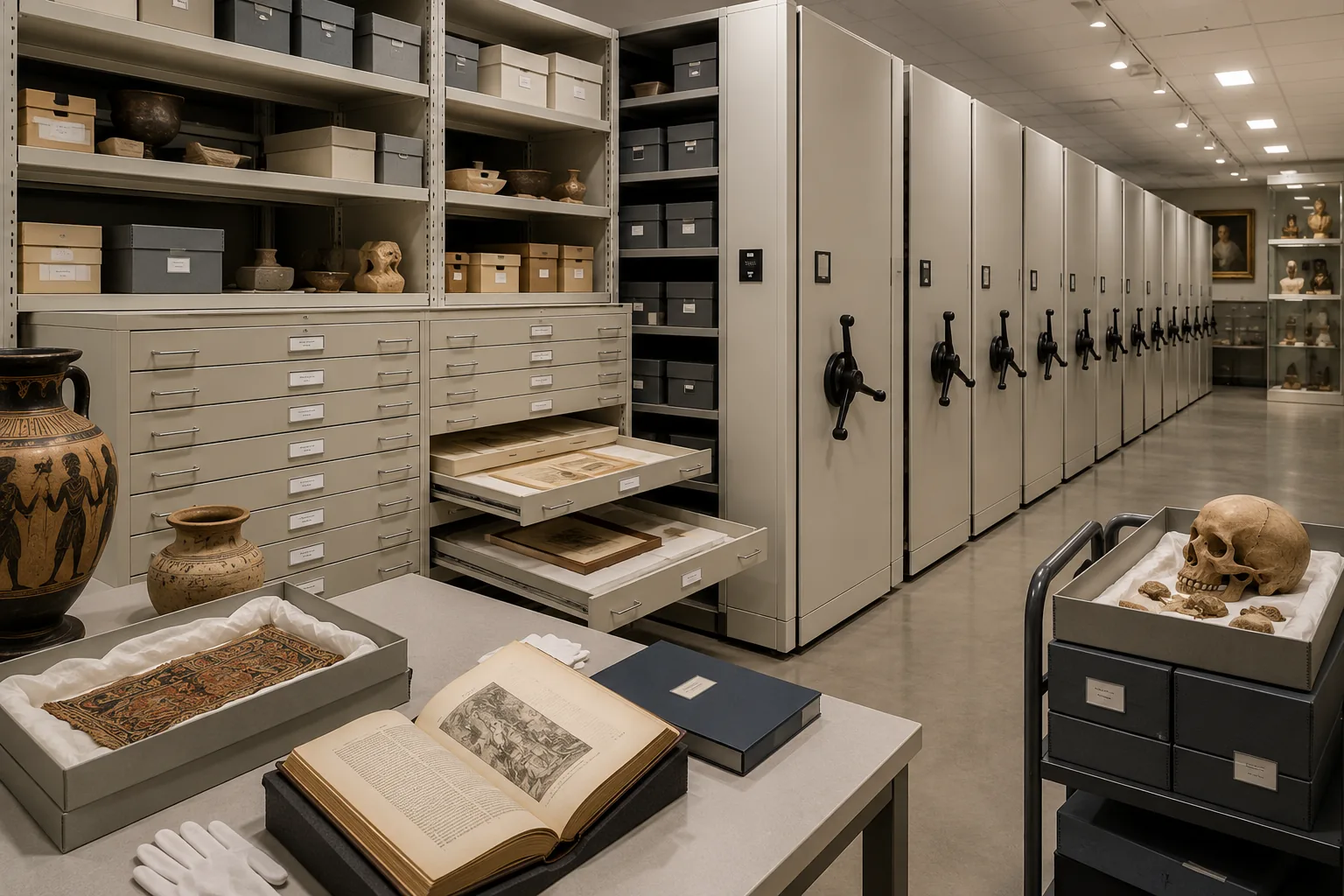
Mobile shelving, archive cabinets, flat-file storage, open shelving and controlled storage zones can be combined according to object type, handling frequency, conservation requirements and long-term collection growth.
The resulting collection-storage plan helps museums organize valuable materials with efficient capacity, controlled access, safe retrieval and collection-specific planning.
Protect access, capacity and collection condition together
Museum storage cannot be planned only by counting shelves. The solution must reflect object dimensions, handling frequency, conservation sensitivity, access responsibility and the amount of growth expected over the collection’s working life.
Different collection formats require different storage decisions
Effective museum storage begins by dividing the project into collection groups before selecting mobile shelving, cabinets, open racks or specialist accessories.
Artifacts and Objects
Artifact storage systems may need to accommodate ceramics, metalwork, sculptures, ethnographic items, decorative objects and boxed collections with different dimensions, loads and handling requirements.
Rare Books and Manuscripts
Historic books, bound records, manuscripts, archives, maps, drawings and printed materials.
Photographs and Media
Photographs, negatives, slides, audio-visual archives, digital carriers and related documentation.
Specimens and Study Collections
Natural history specimens, archaeological materials, teaching collections and research samples.
Match each storage system to the material and handling route
A museum collection room rarely depends on one product. Different materials may need high-density mobile shelving, enclosed cabinets, flat storage, open shelving or specialist supports.
Mobile Shelving Systems
Suitable for boxed archives, study collections and compatible artifact storage where floor area is limited and aisle access can be controlled.
View Mobile Shelving Systems →Archive Storage Cabinets
Useful for documents, small objects, boxed materials and compatible collections requiring enclosed local storage.
View Archive Storage Cabinets →Flat-File / Drawer Storage
Flat or drawer-based storage can be considered for maps, drawings, photographs, prints and other large-format materials that should remain horizontally supported.
View Cabinet Options →Smart Mobile Shelving
Touchscreen control, permission settings and visible operating status can support controlled museum collection rooms used by multiple authorized teams.
View Smart Mobile Shelving →Four checks before the storage layout is approved
The museum’s collection policy and conservation requirements remain the primary reference. The shelving proposal must then fit the building, stored load and daily operating process.
Collection Review
Confirm material groups, dimensions, quantities, handling sensitivity and future acquisitions.
Environment Review
Coordinate temperature, humidity, air movement, light exposure and pest-management access.
Building Review
Verify floor capacity, room geometry, fire systems, doorways, loading routes and installation access.
Operations Review
Define authorized users, research access, retrieval frequency, trolleys, worktables and emergency procedures.
Storage equipment is one layer of collection care
Shelving should support ventilation, cleaning, inspection and safe handling. It cannot replace an appropriate building envelope, HVAC strategy, monitoring program or conservation policy.
Separate receiving, storage, sensitive materials and research handling
A museum collection room should support new acquisitions, quarantine, cataloging, storage, research handling, maintenance and emergency access.
Temporary assessment area
Worktable and handling zone
Controlled access
Supervised handling route
Configuration is confirmed by collection type and room conditions
Final dimensions, load capacity, finish, controls and accessories should be confirmed according to material format, handling requirement, room conditions and collection-care standards.
From collection schedule to installed storage
A museum storage project should be developed from actual collection types, object dimensions, room conditions, conservation requirements and future acquisition plans.
Collection Inventory
Group materials by type, dimensions, quantity, load, access frequency and conservation sensitivity.
Room Assessment
Review dimensions, floor capacity, doors, HVAC, fire protection, electrical points and installation route.
Layout and Zoning
Allocate receiving, storage, retrieval, research, maintenance and sensitive-material areas.
System Approval
Confirm equipment type, capacities, accessories, finish, controls and safety package.
Installation and Handover
Commission movement and safety functions where applicable, label zones and train designated users.
Museum Collection Storage FAQ
Is mobile shelving suitable for all museum collections?
No single system suits every material. Mobile shelving works well for many boxed archives, study collections and compatible artifacts, while oversized, fragile or specialist objects may require fixed racks, cabinets, drawers or dedicated supports.
How much future growth space should a museum storage room include?
Growth allowance should be based on the acquisition plan and collection category. A fast-growing archive may need a different reserve than a stable object collection, so expansion should be considered separately for each group.
Can museum storage include controlled user access?
Yes. Depending on the project, access may use mechanical locks, local controls, passwords, cards or configured permissions. The method should match staffing, security policy and emergency-access requirements.
Can shelving solve humidity or temperature problems?
Shelving can support airflow, monitoring access and good housekeeping, but it cannot replace suitable HVAC, building-envelope control or a professional conservation program.
What information is needed to plan museum collection storage solutions?
Please provide the room plan, ceiling height, door sizes, floor information, collection categories, box or object dimensions, estimated quantities, shelf loads, access frequency, environmental requirements and expected growth.
Can SAS combine mobile shelving, cabinets and fixed shelving in one project?
Yes. Mixed-system layouts can be practical for museum stores because different collection groups have different dimensions, handling methods and access requirements.
What types of museum storage systems can be combined in one collection room?
A collection room may combine mobile shelving, archive cabinets, flat or drawer storage, fixed shelving and specialist supports. The appropriate combination depends on object dimensions, collection type, handling frequency, load, access requirements and conservation conditions.
Continue planning collection and archive storage
Planning a collection storage room around real materials?
Send your room plan, collection schedule, object categories, access-control requirements and storage preference. SAS can prepare a collection-storage proposal covering zoning, storage density, equipment selection, shelf configuration, safety provisions and installation requirements.