Corporate Records Management
Enterprise Document Storage Solutions for Secure Business Records
SAS provides enterprise document storage solutions for corporate headquarters, factories, financial departments, human resources teams, quality-management departments, research centers, branch offices and centralized business archive rooms.
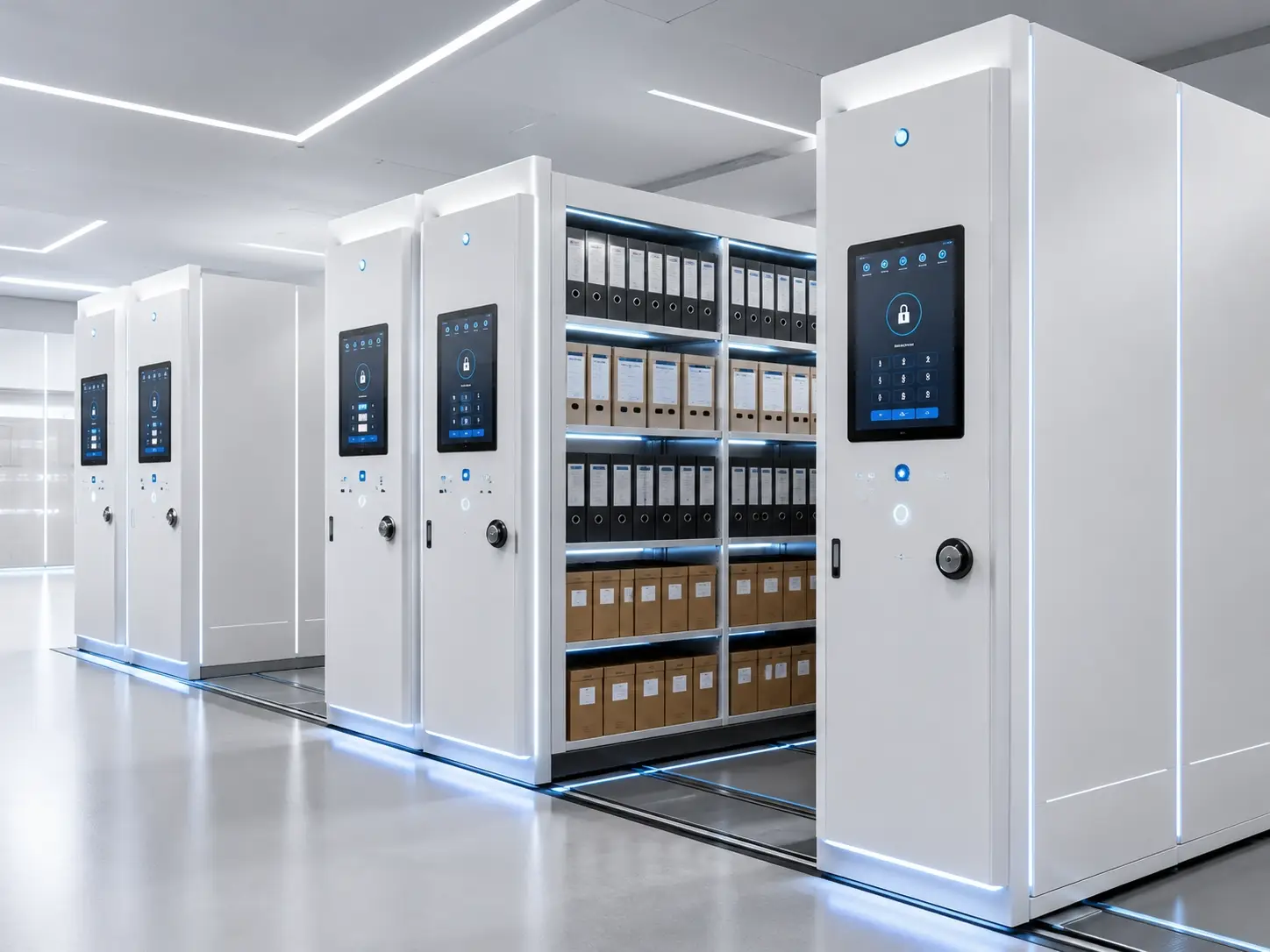
The right enterprise document storage plan assigns each record category to filing cabinets, archive cabinets or high-density mobile shelving.
Corporate Record Lifecycle
Enterprise Document Storage Solutions for Active, Semi-Active and Inactive Records
Enterprise records support daily operations, audits, quality systems, legal review and future reference. Different departments create different file types, and each category should be stored according to access frequency, confidentiality and retention period.
Frequently used documents should stay close to the responsible department. Completed or long-retention records can move into centralized archive cabinets or mobile shelving to improve space efficiency and control.
Active Records
Current contracts, employee files, open projects, recent invoices and daily production documents.
Recommended: filing cabinets and desk-side storage
Semi-Active Records
Completed projects, previous-year financial files, supplier records and audit documents.
Recommended: archive cabinets and accessible mobile rows
Inactive Records
Expired contracts, historical production files, archived policies and closed legal records.
Recommended: centralized high-density mobile shelving
Common Enterprise Challenges
Document storage problems usually begin before the archive room is full
Unclear ownership, mixed record status, department separation, audit pressure and future company growth all affect the final solution.
Departmental document growth
HR, finance, purchasing, sales, quality and engineering may all create separate archives without a coordinated structure.
Active and inactive files mixed together
Daily files occupy archive capacity while old records remain too close to working areas.
Limited office and archive space
Fixed shelving consumes permanent aisle space and limits future storage density.
Confidentiality requirements
Personnel, finance, legal and R&D records may require locks, permissions and restricted zones.
Audit and compliance pressure
Records must remain traceable, clearly classified and retrievable within a reasonable time.
Business expansion
New factories, mergers, departments and branches can quickly increase document volume.
Recommended Storage Combination
Use different products for daily records, enclosed archives and centralized storage
A complete enterprise solution often combines filing cabinets, archive cabinets and mobile shelving instead of forcing every document category into one product.
Steel Filing Cabinets
Drawer cabinets and hanging-file rails support active personnel, finance, legal, customer and departmental records that require frequent categorized access.
Archive Storage Cabinets
Adjustable shelves and lockable doors support binders, boxes, manuals, quality documents and semi-active records that still require accessible protection.
Manual Mobile Shelving
Handwheel movement reduces fixed aisles and increases capacity without complex electrical controls.
Electric Mobile Shelving
Motorized movement, local controls, emergency stop, safety sensors, aisle lighting and overload protection support medium and large archive rooms.
Smart Mobile Shelving
Touchscreen control, user permissions, RFID, position indication and operation records can be integrated according to the company’s document-management process.
Human Resources
Employee files, contracts, attendance, training, performance and retirement records.
Recommended: lockable filing cabinets + restricted archive zone
Finance & Accounting
Invoices, tax files, audit records, statements, payment documents and bank records.
Recommended: central-lock cabinets + annual archive shelving
Purchasing & Supply Chain
Purchase orders, supplier contracts, delivery records, pricing and approvals.
Recommended: departmental filing + centralized archive storage
Sales & Customer Management
Customer contracts, orders, quotations, service records and complaints.
Recommended: active cabinets + completed-project archives
Quality Management
Quality manuals, procedures, inspection reports, audits and corrective actions.
Recommended: labeled archive cabinets + mobile shelving
Engineering & Production
Work instructions, technical files, maintenance records, drawings and production documents.
Recommended: deep shelving + drawing storage + archive cabinets
Department-Based Classification
Assign ownership before assigning shelf space
Clear responsibility helps prevent duplicate storage, missing files, unauthorized access and uncontrolled disposal.
Capacity Planning
Convert document growth into cabinets, shelf length and reserve space
Linear shelf length, department ownership, annual growth and retention periods provide a stronger basis than counting boxes alone.
Measure the current volume
Record archive boxes, binders, hanging folders, files, annual batches and current linear shelf length.
Identify department ownership
Assign each document category to a responsible department or archive manager.
Estimate annual growth
Include retention periods, disposal schedules, department expansion, new business units and reserve capacity.
Confirm file dimensions
Archive-box size, binder height and document depth determine shelf spacing and cabinet selection.
Separate active and long-term storage
Keep working files near departments while transferring inactive records to centralized high-density storage.
Review floor loading
High-density mobile shelving concentrates weight and may require floor verification or reinforcement.
Enterprise Archive Room Layout
Coordinate receiving, work zones, cabinets, mobile rows and confidential storage
The archive room should support document intake, classification, retrieval and return without placing high-frequency files deep inside long-term storage zones.
Mobile Shelving Comparison
Manual, electric or smart operation for enterprise archives?
The right option depends on room size, archive volume, access frequency, internal controls, project budget and future digital-management requirements.
Security and Access Control
Protect confidential records by cabinet, department and user permission
Personnel, finance, legal, customer and R&D records may require different access levels. Security can be managed physically, electronically or through a combination of both.
Compliance and Audit Support
Physical storage should support the company’s document-management procedure
Enterprise archives often support audits, quality systems, traceability, legal review and regulated retention periods.
ISO and quality records
Quality manuals, procedures, inspection reports, calibration records, audit files and corrective-action documents.
Production and supplier records
Product traceability, supplier audits, test results, batch records and process documentation.
Contracts and compliance files
Contracts, licensing documents, legal correspondence, intellectual-property files and regulatory records.
Permissions and retrieval records
Clear ownership, restricted access and operation records support controlled handling.
Archive and disposal schedules
Separate active, retained and disposal-ready records according to internal procedures.
Revision and document history
Store superseded procedures, revision histories and controlled copies in clearly labeled zones.
Project Workflow
From department records and room drawings to installation and handover
Requirement collection
Review company type, departments, room dimensions, document categories, quantity, growth and security.
Document classification
Divide files by department, type, access frequency, retention period, confidentiality and format.
Capacity calculation
Convert documents into shelf length, cabinet quantities, mobile rows and reserve capacity.
Layout development
Plan cabinets, mobile shelving, operating aisles, work zones, secure areas and expansion space.
Technical confirmation
Confirm dimensions, loading, drive type, locks, safety functions, color, packing and installation scope.
Production and inspection
Manufacture, test, identify and pack products according to room, department and installation sequence.
Delivery and installation
Installation may be completed by SAS, a local partner, the customer team or project contractor.
Testing and handover
Verify movement, locking, safety stopping, controls, lighting, alignment and user operation.
Future expansion review
Retain layout records and reserve zones for later shelving or cabinet additions.
Enterprise Application Areas
Storage solutions for headquarters, factories and specialized departments
Corporate Headquarters
Contracts, finance records, personnel documents and management files.
Manufacturing Factories
Production records, quality files, equipment documents and technical manuals.
Finance Departments
Invoices, tax records, audit files, statements and payment documents.
Human Resources
Employee files, contracts, training records and confidential personnel information.
Quality Control
Inspection reports, test records, audit files and traceability documentation.
R&D Centers
Research records, drawings, project data and confidential technical documents.
Legal & Compliance
Contracts, licenses, intellectual-property records and compliance files.
Branch Offices
Local customer, administrative and departmental records before centralized transfer.
Typical Technical Reference
Preliminary ranges for enterprise archive planning
Final dimensions, loading, controls and installation methods should be confirmed according to the storage products, document format, room and project requirements.
Manufacturing and Quality
Details that influence cabinet operation, shelf loading and mobile-system reliability
Cabinet and frame accuracy
Consistent cutting, punching and bending help drawers, doors, shelving frames and mobile bases remain aligned.
Slides, shelves and drive systems
Drawer slides, shelf brackets, tracks, motors and handwheel systems should match the intended document load.
Safety testing and identification
Sensors, brakes, emergency stops, coatings and product labels should be checked before project handover.
Packaging and Project Delivery
Protect and identify cabinets, frames, tracks and control components
Enterprise projects may include products for several departments or rooms. Packaging should support product protection, inventory checking and installation sequencing.
Quotation Checklist
Information required for a practical enterprise storage quotation
When the final configuration is not yet confirmed, send the room plan, department structure, document quantity, annual growth and security requirements. SAS can prepare a preliminary solution.
Frequently Asked Questions
Enterprise document storage FAQ
What storage system is suitable for enterprise documents?
Filing cabinets are suitable for active records, archive cabinets for enclosed departmental storage and mobile shelving for centralized high-volume archives.
How should active and inactive records be separated?
Active records should remain near the responsible department or work area. Inactive records can be transferred to centralized archive rooms or mobile shelving.
Can different departments use the same archive room?
Yes. Departments can be separated by shelving rows, cabinet groups, labels, keys or user permissions.
Can confidential records be stored securely?
Yes. Lockable cabinets, master-key systems, restricted zones, passwords, cards, RFID and selected smart-access functions can be considered.
Can SAS help calculate the required storage capacity?
Yes. Provide the room dimensions, document quantity, archive-box size, annual growth and retention period for preliminary capacity planning.
How much space can mobile shelving save?
The result depends on room shape, shelving dimensions and aisle requirements. Mobile shelving reduces permanent aisle space and can significantly increase storage density.
Can the system store drawings and oversized documents?
Yes. Drawing cabinets, flat storage, wider shelves, large drawers and rolled-document storage can be included.
Can the storage system support future expansion?
Expansion may be possible when reserve space, track layout and control capacity are considered during initial planning.
Are electronic access-control functions available?
Yes. Password, card, RFID and selected smart-access options can be configured according to the project.
Can operation records be stored?
Selected smart systems can record user identity, access time, opened aisles, alarms and system events.
Related SAS Pages
Continue planning the enterprise archive system
Enterprise Archive Project
Planning an Enterprise Document Storage Project?
Send your archive-room dimensions, floor plan, document quantity, department structure, access-control requirements and preferred storage system. SAS will help evaluate capacity, product combination, safety functions and the preliminary layout.