
Hospital Medical Records Storage Solutions
Hospital medical records storage solutions should support patient files, department records, paper medical records and long-term healthcare archives while balancing storage capacity, retrieval efficiency, controlled access and future record growth.
Unlike general document storage, a hospital archive often needs separate zones for active patient files, recently closed records, departmental documents and long-term archives.
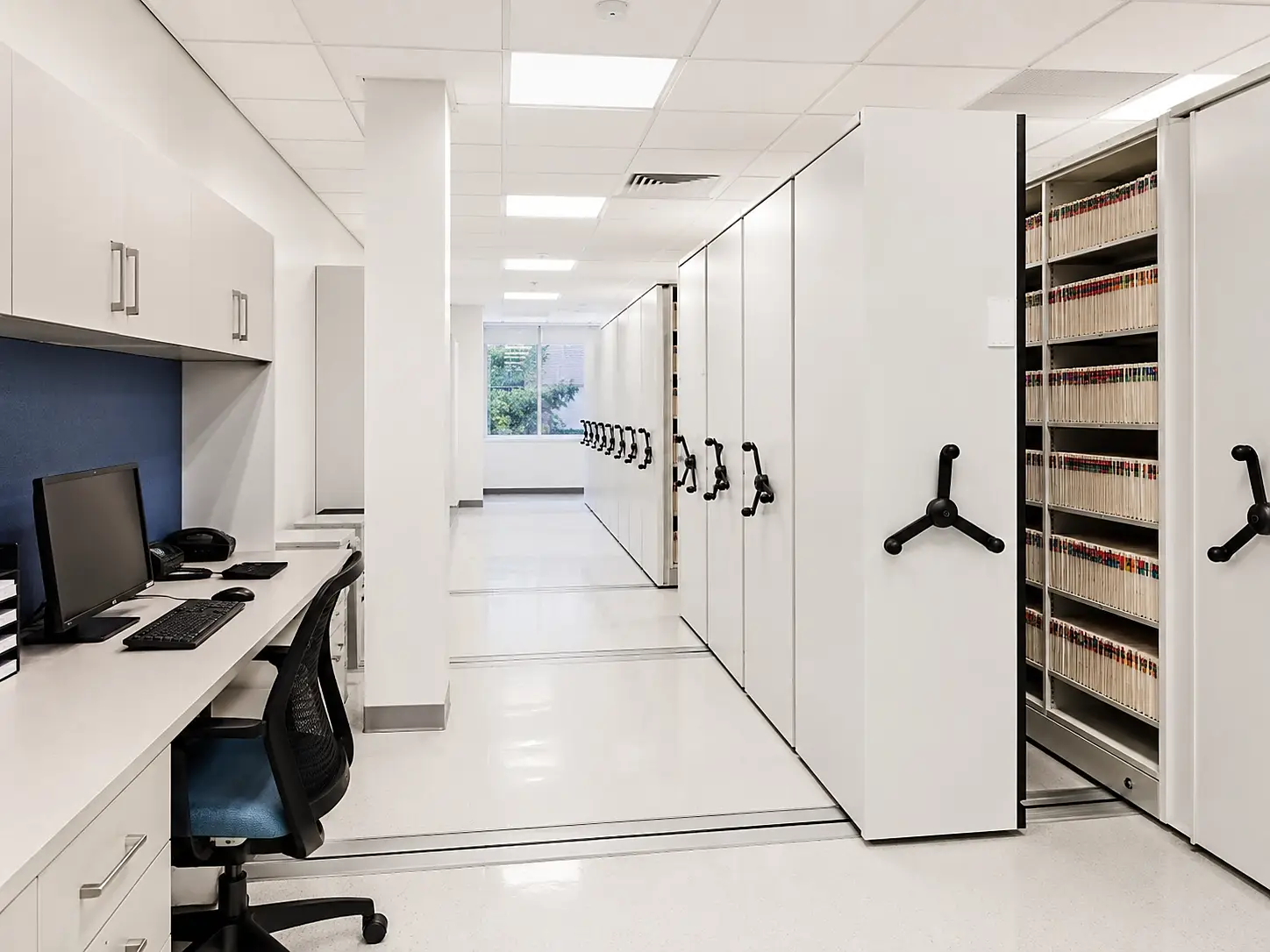
How Hospital Medical Records Storage Solutions Separate Active and Inactive Files
Hospitals may need to store current patient files, recently discharged records, older medical documents, department files, laboratory records and administrative archives in different zones.
Frequently used records should remain close to the relevant records-management or departmental work area. Lower-frequency and long-retention files can be moved into archive cabinets or mobile shelving to reduce pressure on active storage space.
For broader product selection covering clinics, laboratories and other healthcare facilities, see our Medical Records Storage Systems page.
Not every hospital file belongs in mobile shelving
Active files, departmental documents and inactive archives have different retrieval patterns. A mixed system is often more practical than using one storage product throughout the hospital.
Start with retrieval frequency and record ownership
Storage decisions should consider who uses the file, how often it is retrieved, its format and whether additional physical access restrictions are required.
Common Problems in Hospital Records Storage Rooms
Hospital archives can become difficult to manage when record growth, active-file retrieval, department responsibility and long-term storage are handled without a clear zoning plan.
Review Archive Room LayoutContinuous Record Growth
Patient and administrative records continue to accumulate, requiring realistic future-capacity planning.
Mixed Record Formats
Folders, binders, archive boxes and department documents can require different shelf depths and storage products.
Retrieval Efficiency
Frequently requested records should remain easy to identify without forcing staff to search the entire archive.
Privacy and Access Control
Sensitive healthcare records may require physical locks, restricted archive areas or clearly defined user responsibility.
Hospital Medical Records Storage Solutions for Different Storage Zones
Filing cabinets, archive cabinets and manual, electric or smart mobile shelving can be assigned according to record status, retrieval frequency and project requirements.
Filing Cabinets for Active Records
Suitable for current patient files and administrative documents requiring frequent categorized retrieval.
View Filing Cabinet →Archive Cabinets for Department Files
Useful for protected departmental records, folders, binders and semi-active document groups.
View Archive Cabinet →Mobile Shelving for Inactive Records
Suitable for larger volumes of older patient records, archive boxes and long-retention healthcare files.
View Mobile Shelving →Smart Shelving for Controlled Archives
Touchscreen operation, visible system status and project-confirmed permission functions can be considered where higher-level control is required.
View Smart Shelving →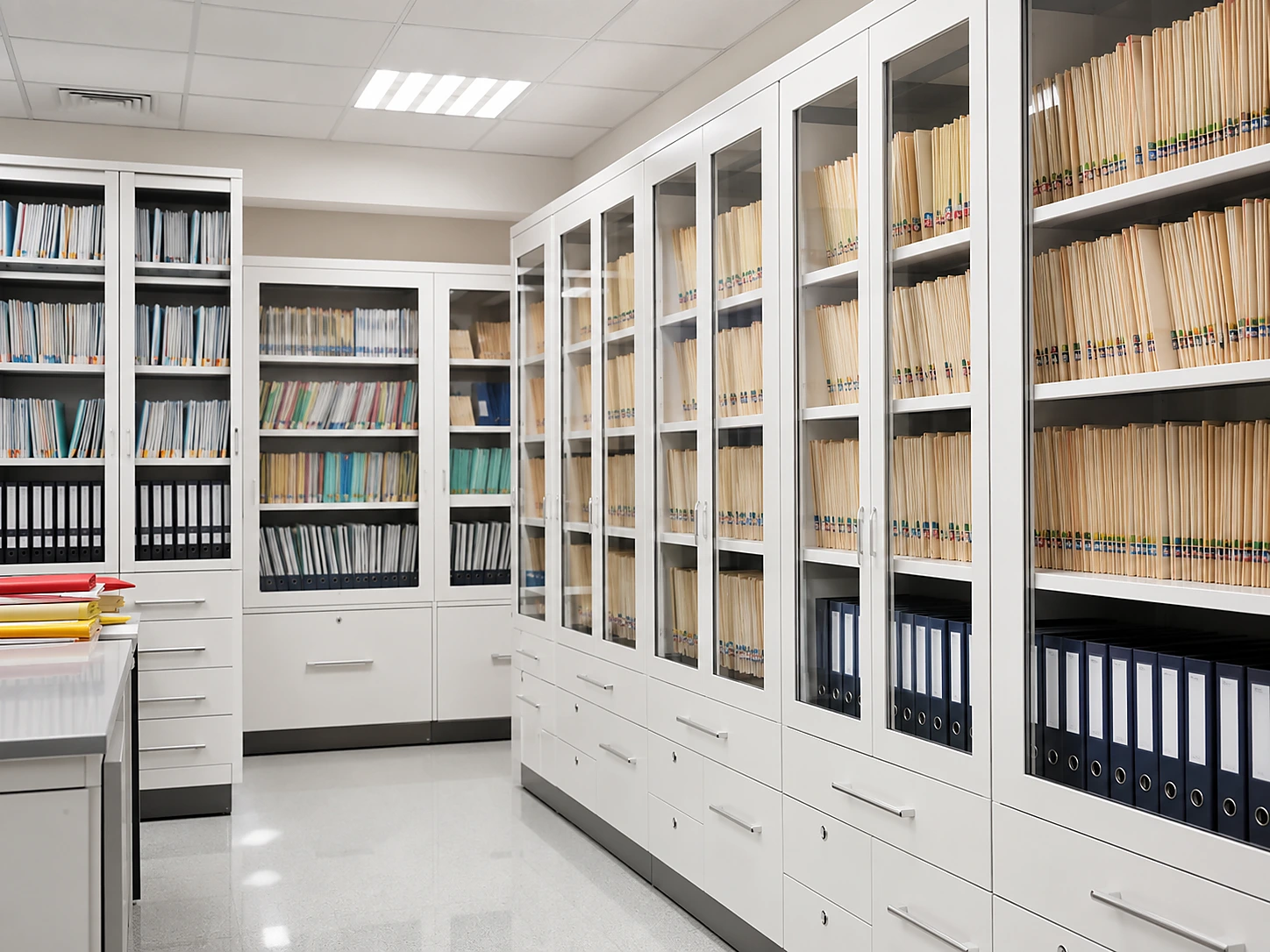
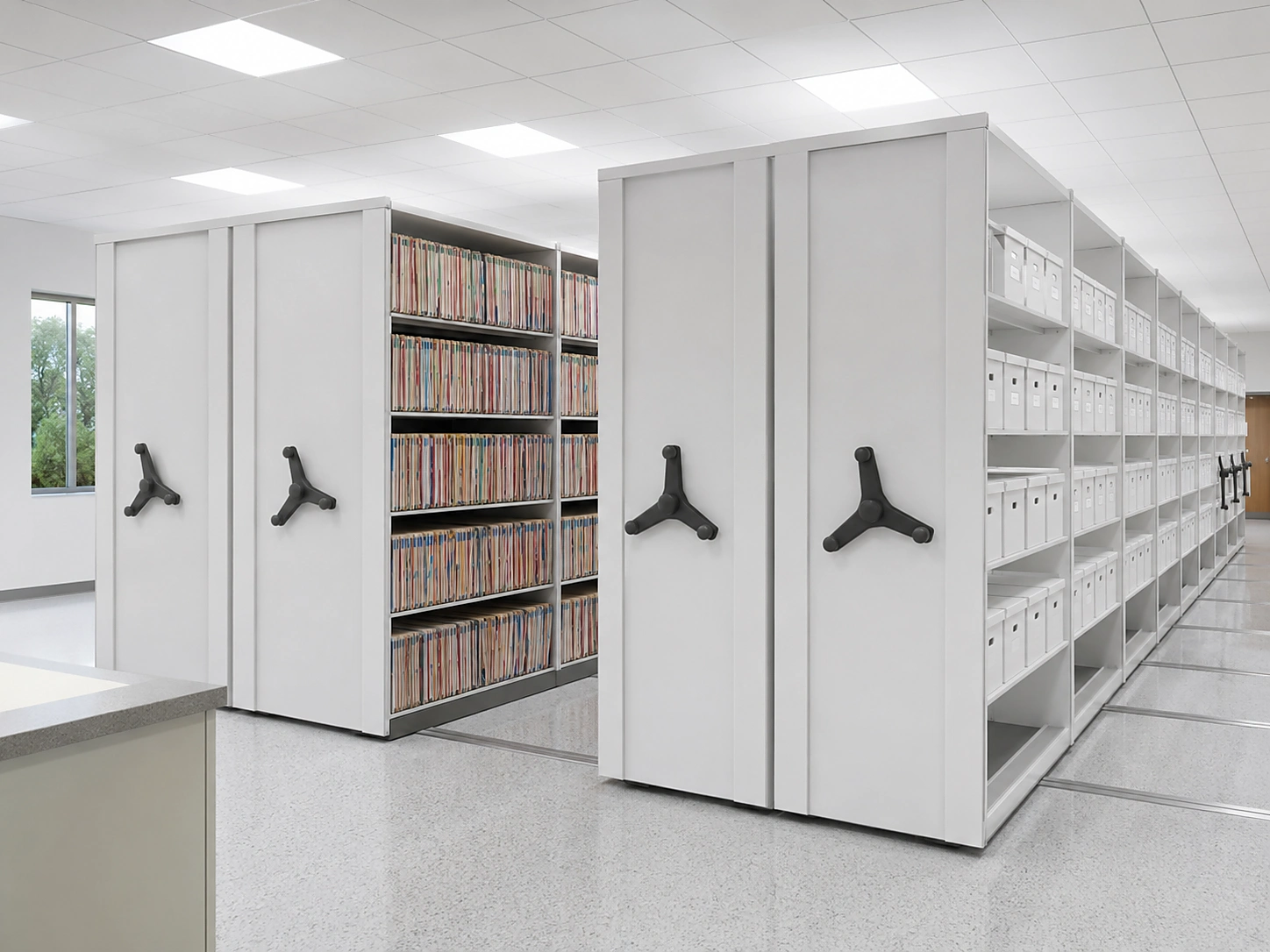
Mobile Shelving Can Reduce Permanent Aisles in Hospital Archives
Mobile shelving creates working aisle space where access is needed instead of maintaining many permanently open aisles. This can be useful for hospitals with large inactive record volumes and limited archive-room area.
- Use high-density storage for suitable inactive and long-retention records.
- Organize archive rows by year, department or another approved classification structure.
- Select manual, electric or smart operation according to retrieval and management needs.
- Reserve future capacity before the archive room becomes overloaded.
Plan File Movement from Department Use to Long-Term Archive
The physical storage layout should reflect how hospital records move between active use, departmental holding and centralized long-term storage.
Active Department Use
Frequently retrieved files remain close to authorized staff in filing cabinets or other accessible storage.
Recently Closed Records
Files that are no longer in constant use can move to departmental archive cabinets or accessible archive shelving.
Central Archive Transfer
Suitable lower-frequency records can be transferred to categorized high-density archive storage.
Retention Review
The healthcare facility applies its own approved retention, review, transfer or disposal procedures.
Frequently Used Records Should Be Easy to Identify and Retrieve
A hospital archive should not only maximize capacity. It should also keep records classified and convenient for authorized staff.
- Separate active records from lower-frequency archive files.
- Use visible labels, bay numbers and consistent classification rules.
- Keep frequently accessed records closer to the retrieval or work area.
- Define responsibility for retrieval, return and archive management.
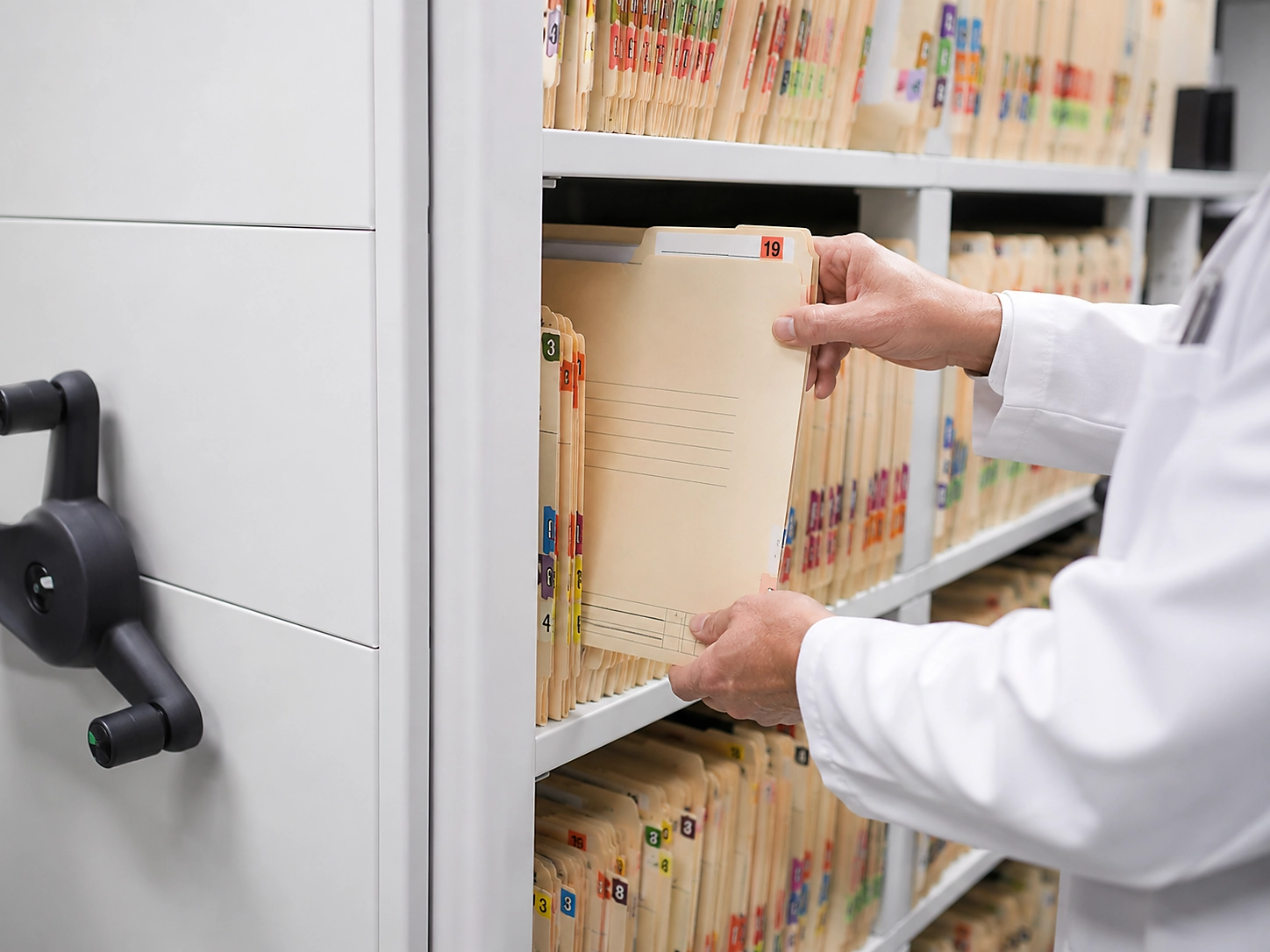
Hospital Archive Room Planning Points
Hospital medical records storage planning should consider the room, building structure, access routes and archive-management process before equipment is produced.
Separate Active and Inactive Zones
Organize records according to retrieval frequency and responsibility instead of placing every file type in the same archive zone.
- Current patient files
- Recently closed records
- Department archives
- Long-term storage
Check Floor Load and Access Route Early
Dense paper archives can create significant stored loads. Room and installation conditions should be reviewed before the final shelving layout is approved.
- Floor condition and structural review
- Door and corridor access
- Columns and fixed equipment
- Rail and installation arrangement
Define Privacy and Retrieval Responsibility
Sensitive record areas should use clear physical and operational access rules. Smart functions should only be added where they meet a confirmed project need.
- Authorized staff responsibility
- Department storage zones
- Restricted archive areas
- Operating and return procedures
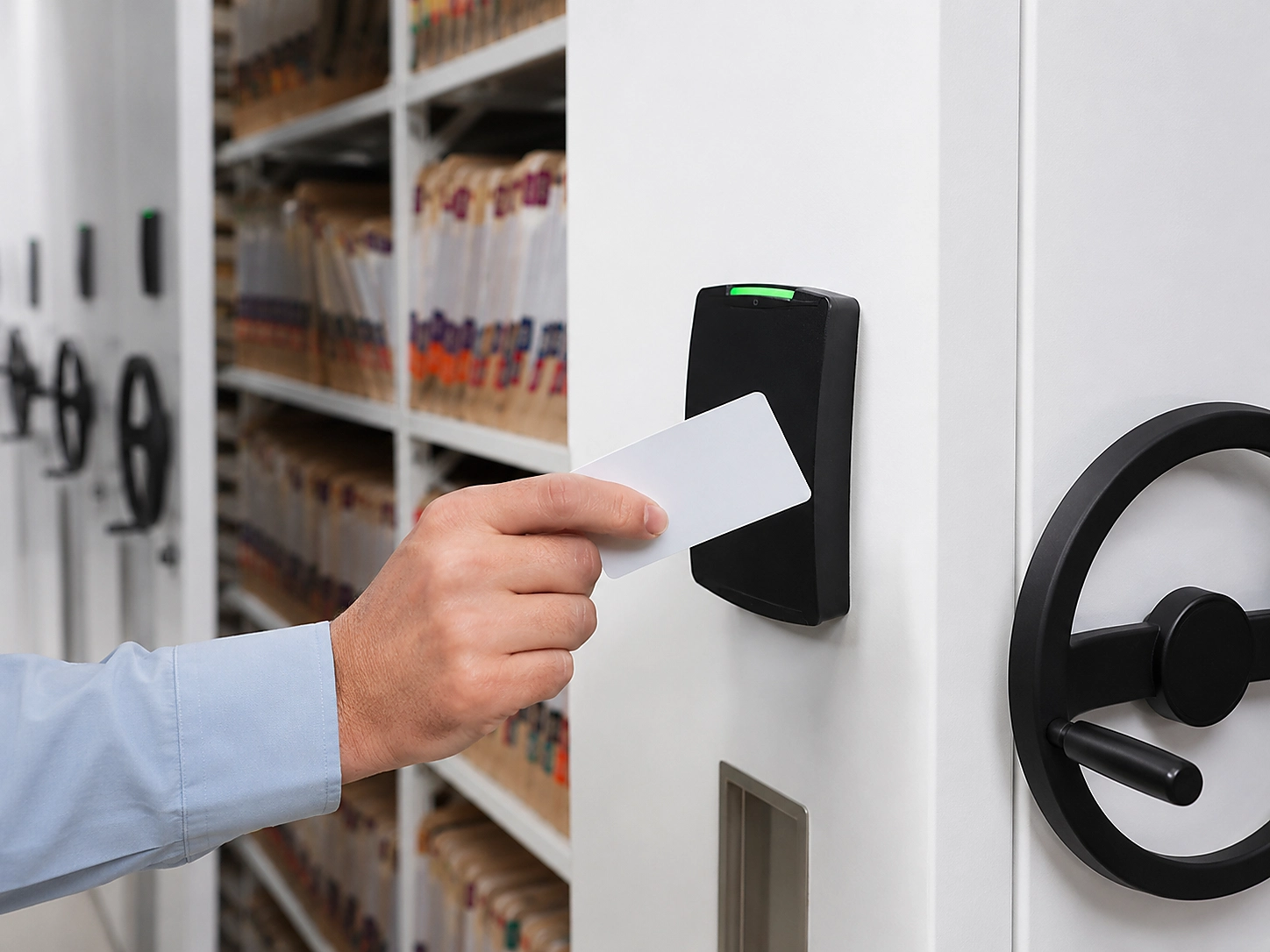
Controlled Access Can Support Sensitive Hospital Archive Areas
Where physical archive access is restricted to defined staff or departments, the storage plan can combine lockable products, controlled archive zones and project-confirmed smart functions.
- Use cabinet or row locks for straightforward physical control.
- Separate sensitive files into defined archive zones.
- Consider configured user-permission functions where specified in the project.
- Treat electronic controls as part of the physical storage system, not as a replacement for hospital privacy policy.
Information Needed for Hospital Medical Records Storage Solutions
A practical quotation needs more than the room size. File quantity, record formats, workflow and access requirements affect the final product combination and archive layout.
Hospital Medical Records Storage FAQ
What products are used in hospital medical records storage solutions?
Hospitals may combine steel filing cabinets for active records, archive cabinets for departmental or semi-active records, and mobile shelving for larger lower-frequency archives. The final combination depends on file format, retrieval frequency, room conditions and access requirements.
Is mobile shelving suitable for patient records?
Yes, mobile shelving can be used for suitable larger volumes of patient records where the room layout, floor conditions and retrieval workflow support high-density storage.
Can paper medical records be stored in archive boxes?
Yes. Archive boxes can be stored on suitable shelving or in archive cabinets. Shelf depth, spacing and loading should be matched to the actual box dimensions and stored weight.
How can hospitals improve medical-record retrieval?
Separate active and inactive files, use consistent labels and bay numbers, organize records by an approved classification method, and keep high-frequency records closer to the responsible staff or retrieval area.
Do hospital archive rooms need smart mobile shelving?
Not always. Manual or electric systems may be sufficient for many projects. Smart shelving is more relevant when the hospital specifically requires touchscreen operation, configured permissions, visible system status or other approved project functions.
What should be checked before installing mobile shelving in a hospital?
The room dimensions, floor condition, structural loading, door and corridor access, columns, track arrangement, fire-related requirements and installation responsibilities should be reviewed before the final system is approved.
Can SAS help plan the whole hospital records archive room?
SAS can review room dimensions, file quantity, record formats, retrieval frequency and preferred storage products to prepare a preliminary product combination, capacity plan and archive-room layout.
Related Healthcare Storage Products and Resources
Send Your Hospital Archive Room Details to SAS
Share your room dimensions, floor plan, record formats, file quantity, retrieval frequency and access requirements. SAS can prepare a preliminary hospital medical records storage layout and product combination for your project.