Archive Constant Humidity Purification Unit
Designed as a constant humidity purification integrated unit for archive-environment equipment projects, this module is configured for archive-room environmental projects together with the room layout, collection requirements and related protection equipment.
Official equipment positioning from the catalogue
The catalogue places the Archive Constant Humidity Purification Unit within the smart archive storeroom environment portfolio. It is not presented as a universal standalone package: final selection is coordinated with archive-room conditions, preservation priorities, monitoring responsibility and the wider control arrangement.
Specified as part of archive environment construction, alongside purification, monitoring and control equipment.
Unit selection should follow the confirmed room, collection, building-services and operating requirements.
May be considered together with air-quality, mold-prevention, deacidification, water-leak and control modules.
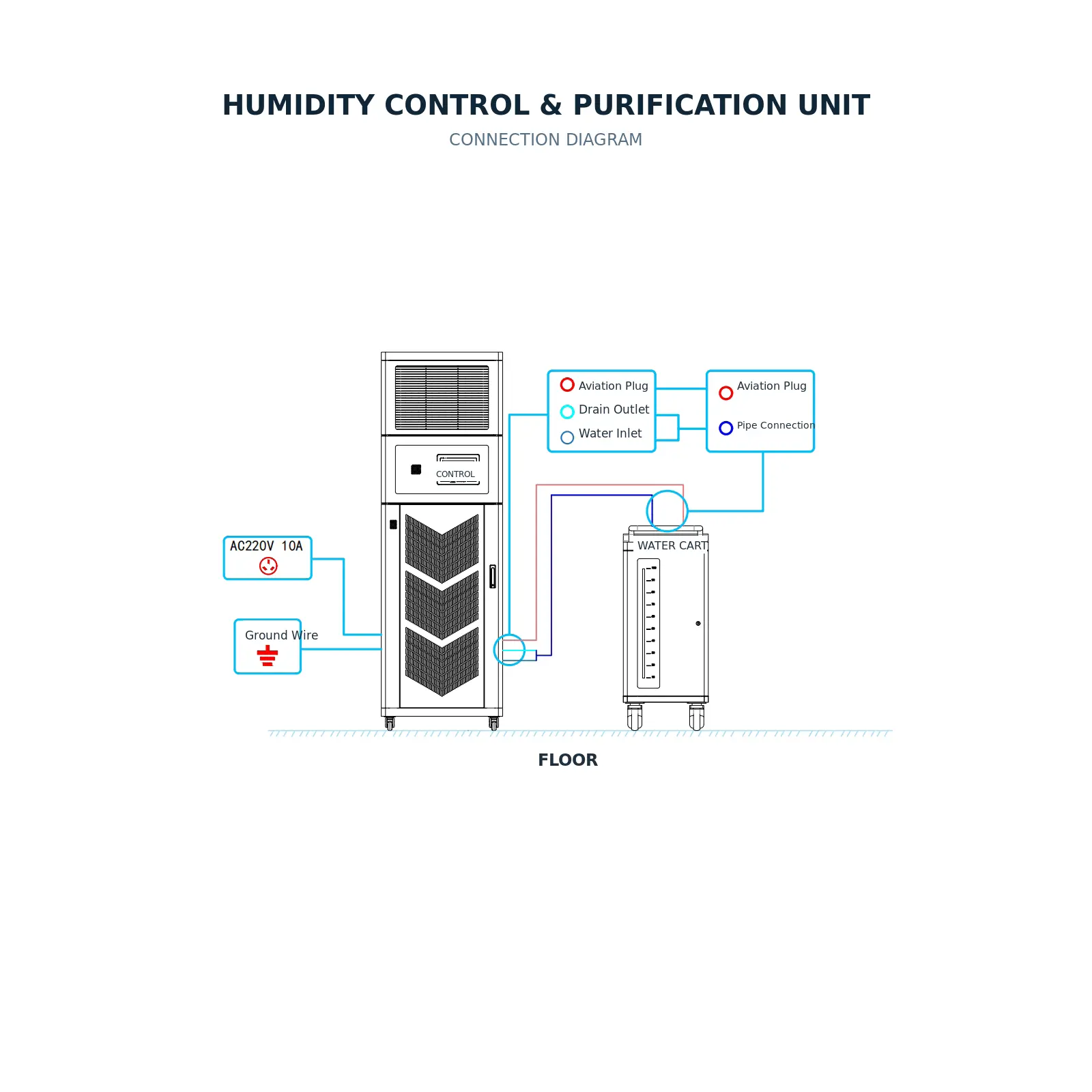
What this page does and does not claim
The source catalogue confirms the product category and its role in the archive environment equipment portfolio.
- It supports a constant-humidity and purification equipment configuration for archive rooms.
- It may be coordinated with adjacent monitoring, purification and control modules.
- Capacity, environmental targets, interfaces and exact configuration require project review.
Unconfirmed performance figures are intentionally not shown as fixed specifications.
Coordinate one archive environment, not isolated equipment
In the catalogue, the Archive Constant Humidity Purification Unit sits alongside other archive-room protection modules. The final equipment combination should reflect actual room conditions and operational responsibility.
Information needed to configure the unit
Archive room and collection
- room plan, dimensions, storage layout and access routes;
- collection type, material condition and preservation priorities;
- existing humidity history, observed risks and operating schedule;
- location of doors, windows, walls, services and known vulnerable zones.
Building services and integration
- existing HVAC, fresh-air, drainage and electrical conditions;
- required monitoring, alerts, records and responsible operators;
- related equipment to be coordinated, such as air-quality or mold-control modules;
- destination-country requirements and project documentation scope.
Related official archive environment equipment
The same catalogue section also shows a document purification chamber, air-shower passage, air-quality cloud monitor, leak and rodent monitor, deacidification purification unit, mold purification machine, dust-purification workstations, regional controller and lighting/access controller. These are separate modules; SAS will not treat them as automatically included with an Archive Constant Humidity Purification Unit.
Archive Constant Humidity Purification Unit FAQ
Is this a fixed standard package?
No. The catalogue presents it as archive environment equipment. The final unit and related modules must be selected for the actual project.
Can it be combined with air-quality or mold-control equipment?
Yes, the catalogue presents these as related archive environment modules. The actual combination, interface and operating responsibility need confirmation.
Are humidity targets and capacity stated on this page?
No. The source catalogue page does not publish project-ready performance figures for a universal configuration, so they must be confirmed during technical review.
What should be sent for an initial project review?
Share the room plan, collection profile, existing building services, environmental history, required functions and destination country.
Plan archive environmental protection around the real room
Send your room plan, collection profile and current environmental information. SAS will help define an appropriate equipment scope and the supporting monitoring or control modules.
Discuss Your Archive Project