Archive Cabinet Selection
Archive Storage Cabinet Types, Configurations & Selection Guide
SAS supplies archive storage cabinets for offices, record rooms, schools, libraries, government departments and enterprise document centers. This page compares common cabinet structures and explains how to select door type, shelf arrangement, dimensions, security level and export configuration according to the project.
Organized Enclosed Storage
What is an archive storage cabinet?
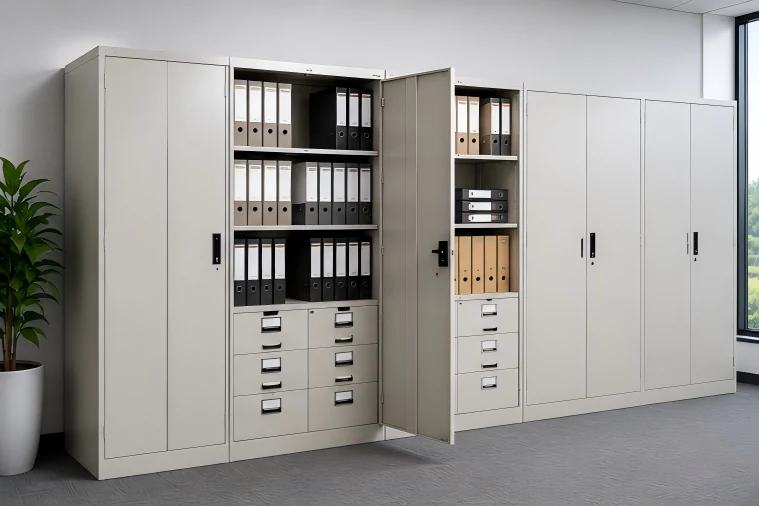
An archive storage cabinet is an enclosed storage unit used to organize files, records, binders, archive boxes and other office documents. Compared with open shelving, enclosed cabinets can reduce dust exposure, support controlled access and separate records by department, document type or security level.
Cabinets may be installed individually, arranged in continuous wall runs or combined with mobile shelving in a complete archive-room layout. Different door structures solve different space and access problems, so the most suitable cabinet should be selected according to the stored material and room conditions rather than external dimensions alone.
Cabinet Construction
Main elements to compare before selecting a cabinet
A reliable archive storage cabinet depends on the relationship between cabinet body, shelf support, door movement, lock control and coating quality.
Cold-rolled steel panels with folded edges and internal reinforcement can improve alignment and stability. Final sheet thickness depends on cabinet size, component position and required loading.
Shelf levels can be repositioned to accommodate binders, folders, archive boxes and mixed document heights. Additional shelves may be considered where smaller spacing is required.
Swing, sliding, glass-panel and combination configurations solve different requirements for aisle clearance, visibility, security and access frequency.
Mechanical locks, master-key arrangements, combination locks and selected electronic options can be discussed according to the required access-control level.
Cleaning, surface pretreatment and powder coating provide a uniform indoor finish and practical protection during normal office and archive use.
Archive Storage Cabinet Types
Choose the cabinet structure by access, space and stored material
Different door and internal configurations solve different storage problems. Compare room clearance, document format, access frequency and security requirements before selecting the final cabinet type.
Swing-Door Cabinet
Front-opening swing doors provide direct access to the full internal storage width and are widely used in offices, schools, archive rooms and departmental record areas where sufficient opening clearance is available.
View Steel Swing Door Archive Cabinet →Sliding-Door Cabinet
Doors move horizontally and require less operating space in front of the cabinet, making this structure suitable for narrow aisles and compact office layouts.
Glass-Door Cabinet
Glass panels allow users to identify books, manuals, samples and frequently accessed materials without opening the cabinet. Glass configuration should be confirmed according to project requirements.
Combination Cabinet
Combination cabinets can integrate steel doors, glass sections, drawers, open sections or internal compartments where several document or office-material formats must be stored within one unit.
Custom Archive Cabinet
Height, width, depth, partitions, shelf spacing and lock configuration can be reviewed when standard cabinet structures do not match the room, file dimensions or management procedure.
Typical Technical Range
Reference specifications for preliminary archive cabinet selection
The following values are typical references for common steel archive cabinet configurations. Final dimensions, steel thickness, shelf loading, door type, lock system and packaging must be confirmed according to the selected product structure.
Selection Logic
How to select an archive storage cabinet
Start with the documents, room layout and access requirements. Cabinet size should be the result of these conditions—not the first specification selected.
Confirm the stored item
Identify loose files, binders, archive boxes, hanging folders, drawings, books, confidential records or mixed office supplies. This determines internal depth, shelf spacing and partition requirements.
Measure usable room space
Check wall length, ceiling height, cabinet depth, aisle width, door-opening clearance and nearby columns or equipment. Sliding doors may be preferable where front clearance is restricted.
Convert records into capacity
Estimate binder quantity, archive-box quantity, linear shelf length and expected future growth. Reserve capacity can reduce premature replacement or room reorganization.
Assess access frequency
Frequently used records should remain in convenient operating positions, while long-term records can use less frequently accessed shelf levels where appropriate.
Define security control
General records may use standard locks. Personnel, financial or confidential files may require individual locks, master-key arrangements or selected access-control options.
Select shipment construction
Knock-down cabinets can improve container utilization. Assembled cabinets reduce on-site assembly work but normally require more transport volume and stronger external protection.
Product Boundary
Archive storage cabinet or mobile shelving system?
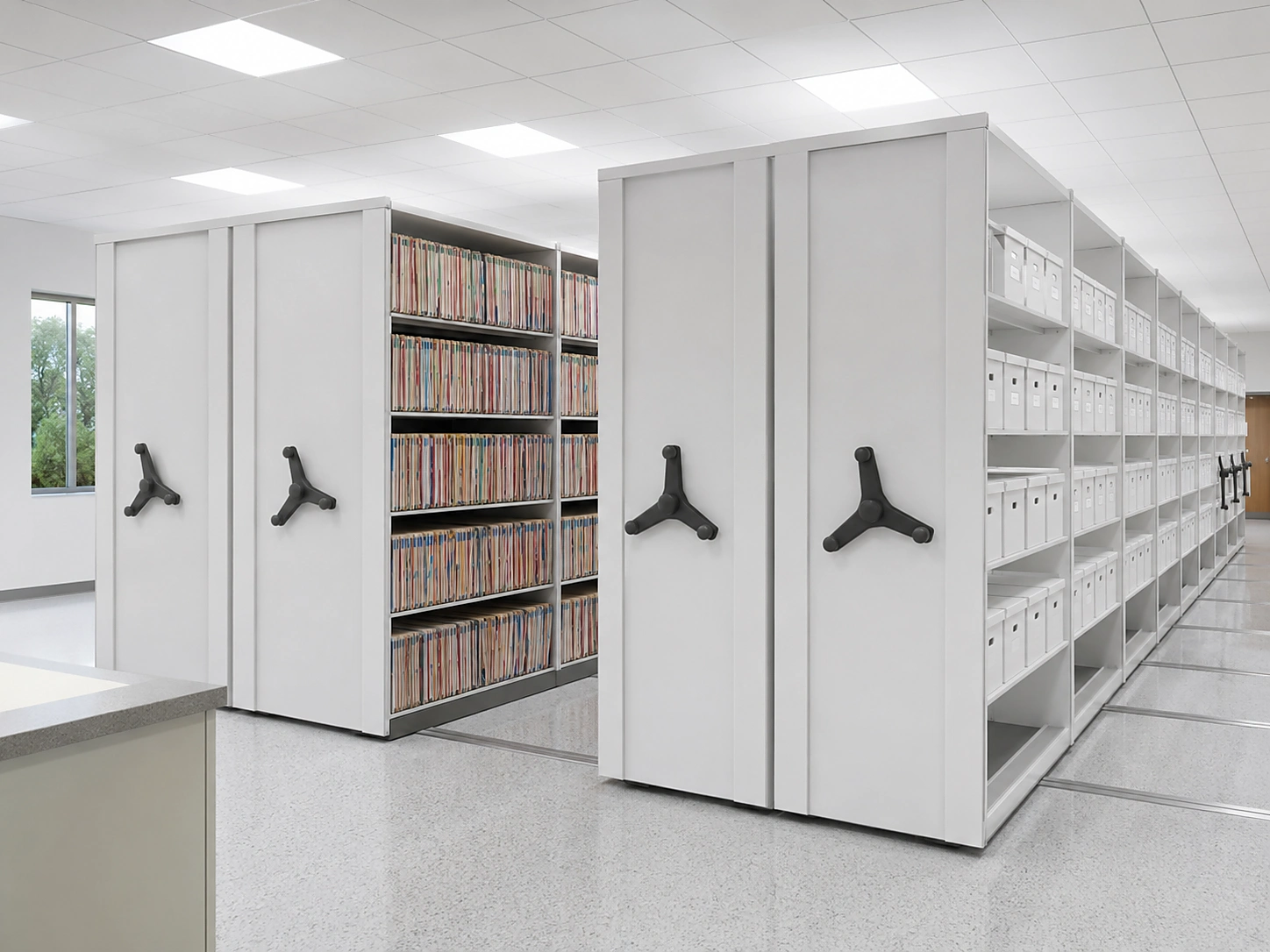
Both systems store documents, but they solve different floor-space and management problems. Many archive projects use independent cabinets for active files and mobile shelving for centralized long-term records.
Archive Storage Cabinet
Mobile Shelving System
Configuration Options
Cabinet configuration adjusted around the purchasing requirement
Different cabinet structures may require different steel thicknesses, internal layouts and hardware. Final configuration should be confirmed according to document type, loading, security requirement, quantity and shipment method.
Application Areas
Archive storage cabinets for active records and controlled documents
Independent cabinets are commonly selected where documents need organized classification, enclosed storage and convenient departmental access.
Government Archives
Administrative records, official documents, personnel files and departmental archives.
Corporate Offices
Contracts, finance records, customer files, quality records and internal management documents.
Schools & Universities
Student records, teaching files, examination materials and campus administration documents.
Libraries
Books, manuals, reference materials and collections requiring enclosed cabinet storage.
Engineering Companies
Drawings, inspection records, production documents, manuals and technical files.
Financial Offices
Contracts, transaction records, compliance documents and restricted-access files.
Manufacturing Focus
Details that influence stability, alignment and service life
Panel forming & reinforcement
Consistent bending, accurate dimensions and correctly positioned reinforcement help the cabinet body remain square and stable, particularly for wider cabinets and higher shelf loads.
Door and shelf operation
Door alignment, hinges or tracks, handles, shelf clips and supports should allow repeated operation while keeping adjustable shelves securely positioned.
Coating and edge treatment
Uniform powder coating provides a clean surface, while folded and finished edges reduce exposed sharp metal during assembly, handling and normal use.
Export Packaging
Protection selected according to cabinet structure and shipment method
Knock-down cabinets reduce transport volume. Assembled cabinets require more shipping space and stronger external protection. Packaging should be confirmed according to structure, order quantity, route and destination.
Quotation Checklist
Information required for an archive storage cabinet quotation
If the exact cabinet type has not yet been selected, send the application, stored document type, available space and quantity first. SAS can use this information as the starting point for configuration review.
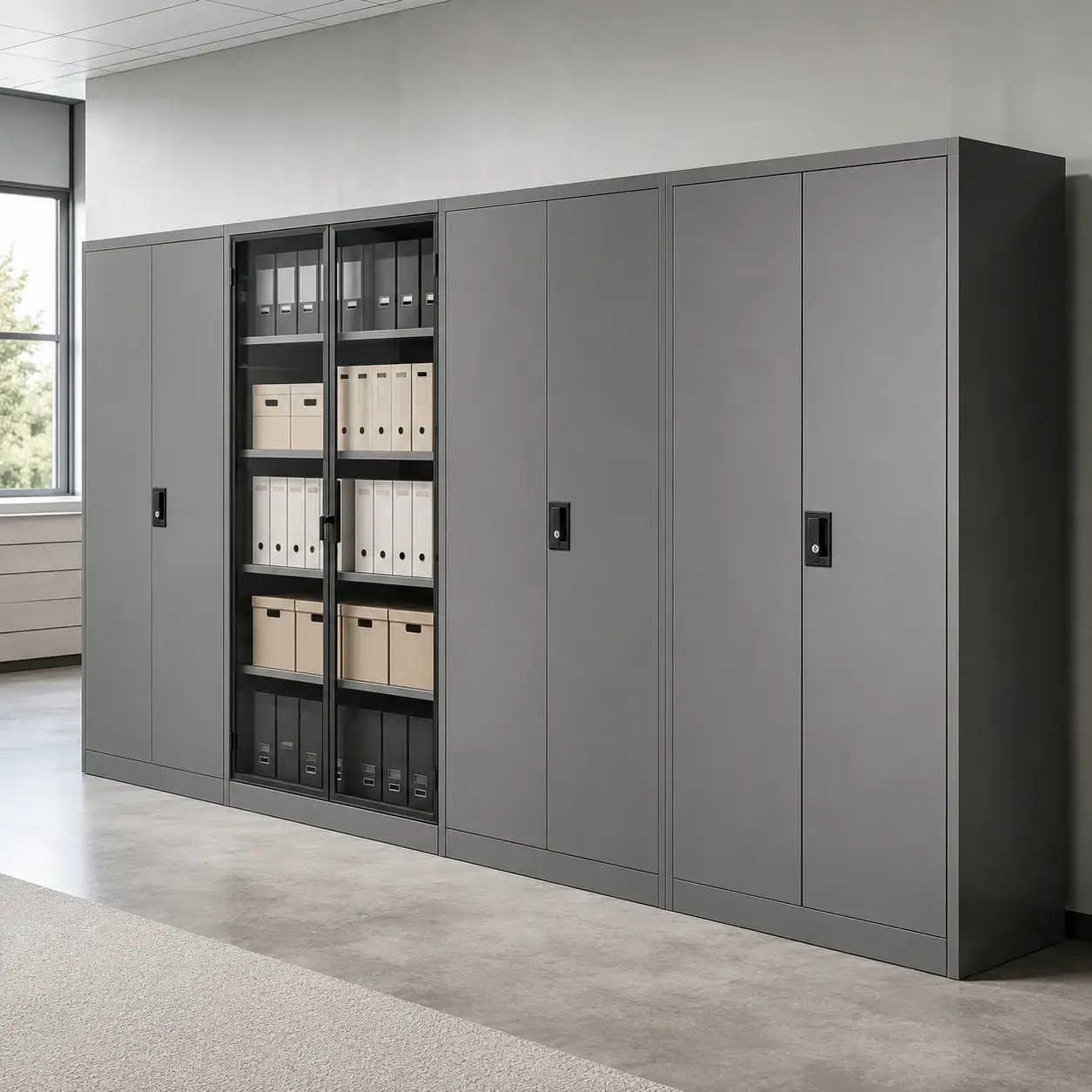
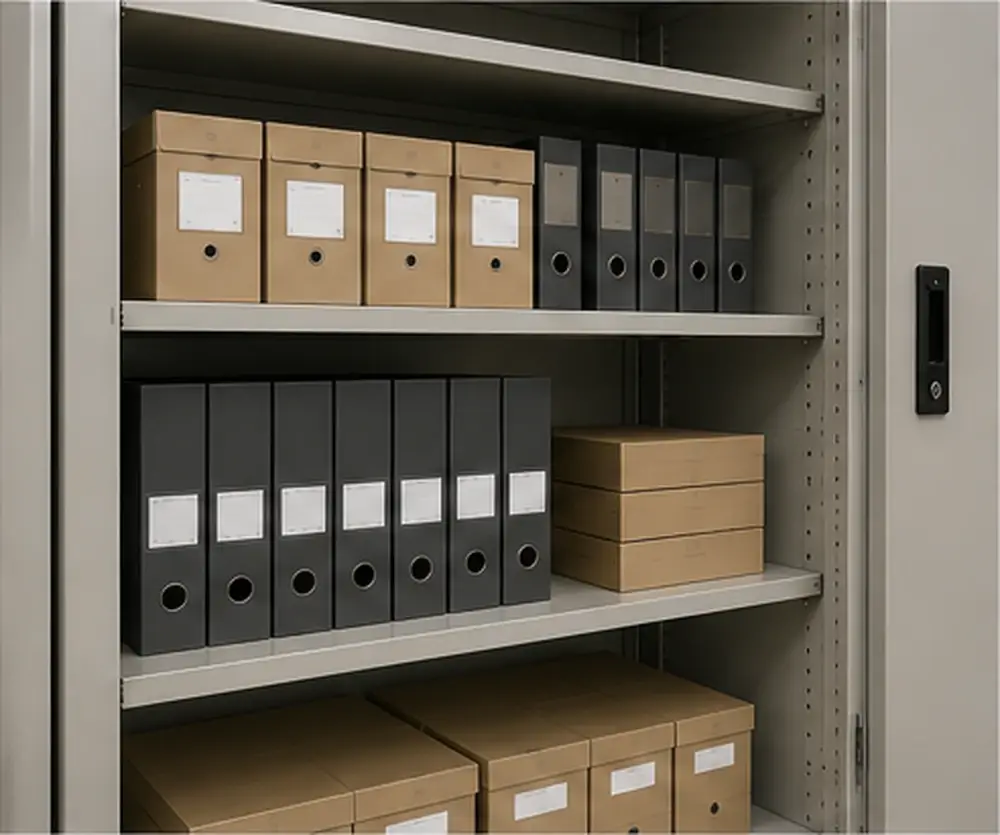
Real Cabinet Configurations
Review the cabinet structure before final specification
Door structure, internal shelf arrangement, document format and access conditions determine the suitable archive cabinet configuration.
Frequently Asked Questions
Archive Storage Cabinet FAQ
Common questions about cabinet structure, dimensions, shelves, doors, locks and export configuration.
What is an archive storage cabinet used for?
Archive storage cabinets are used to organize files, binders, archive boxes, records and other documents in offices, record rooms, libraries, schools and institutional storage areas.
What archive cabinet door types are available?
Common structures include swing doors, sliding doors, glass-panel doors and combination cabinets. The appropriate structure depends mainly on room clearance, visibility, security and access requirements.
What material is commonly used for archive cabinets?
Many archive cabinets are manufactured from cold-rolled steel sheet with a powder-coated finish. Final thickness and reinforcement depend on cabinet structure, dimensions and required loading.
Are the internal shelves adjustable?
Yes. Adjustable shelf supports can be used so spacing can be changed for binders, files, archive boxes and other stored materials.
What archive storage cabinet sizes are available?
Typical reference ranges may be approximately 1,800–2,000 mm high, 800–1,000 mm wide and 350–500 mm deep. Final dimensions should be confirmed according to the selected cabinet structure and project.
How much weight can each shelf hold?
Typical reference loading may be approximately 30–80 kg per shelf depending on steel thickness, shelf design and support structure. Required loading should be confirmed before production.
Are knock-down archive cabinets available for export?
Yes. Knock-down construction can reduce shipping volume. Final construction and packing should be selected according to cabinet structure, quantity, destination and installation conditions.
When should mobile shelving be selected instead of archive cabinets?
Mobile shelving is generally more suitable when the primary requirement is high storage density and centralized archive management within limited floor space.
Related SAS Pages
Continue planning your archive storage system
Project-Based Quotation
Need an Archive Storage Cabinet Quotation?
Send the stored document type, preferred cabinet structure, dimensions, shelf requirement, lock requirement, quantity, packing preference and destination country. SAS will help establish a suitable cabinet configuration and quotation basis.