University Archive Storage Solutions for Campus Records and Special Collections
SAS provides university archive storage solutions for student records, academic files, administrative documents, theses, research materials, manuscripts, rare books, photographs and campus archives.
Mobile shelving, archive cabinets, filing cabinets and library shelving can be combined according to collection type, retrieval frequency, access responsibility, preservation needs and long-term campus growth.
The resulting campus archive plan helps universities organize institutional records, departmental files and special collections with clear zoning, secure retrieval and realistic future-capacity planning.
University archive storage must support more than capacity
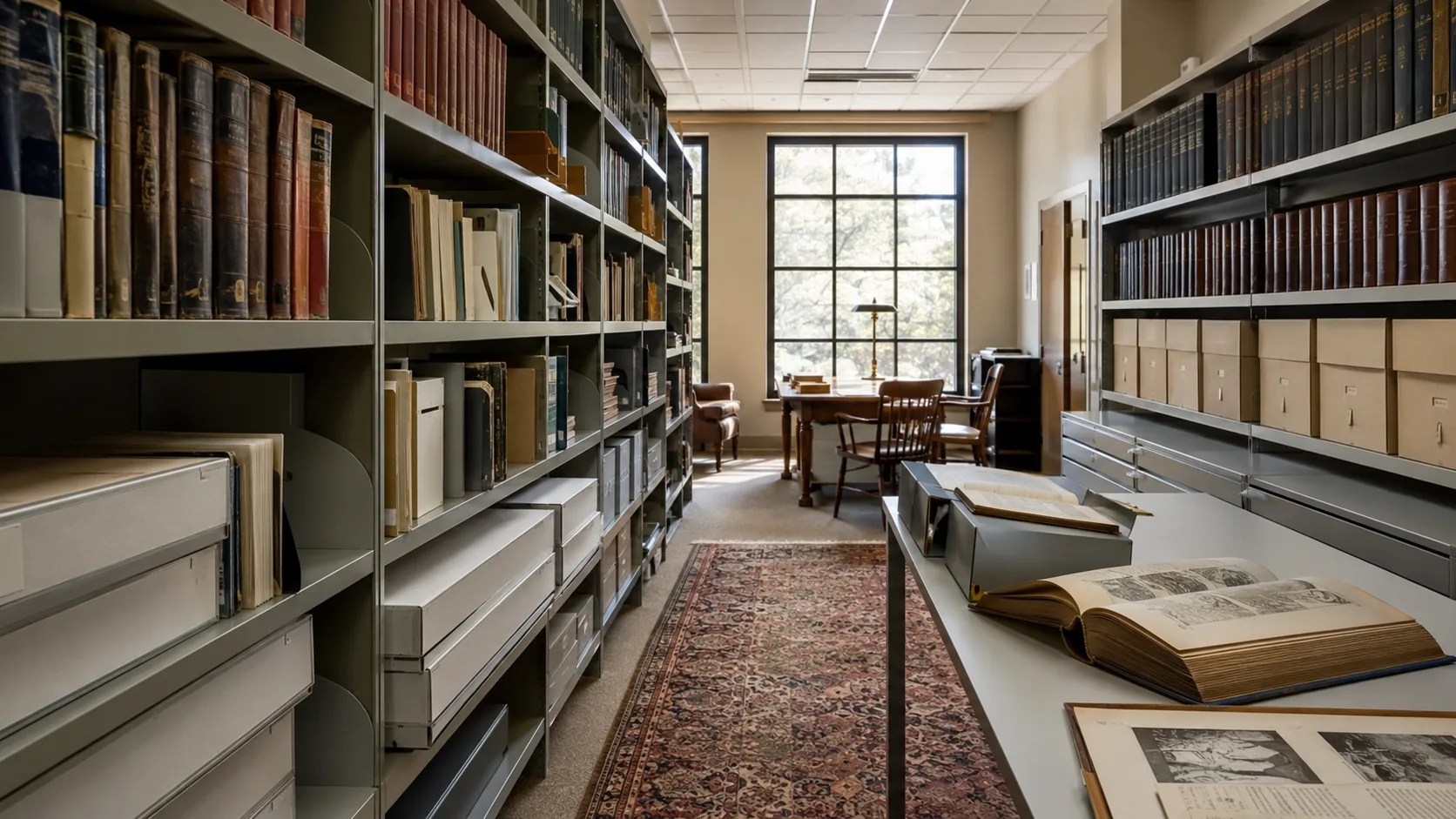
A university archive often serves administrators, faculty, students, alumni and external researchers. The storage system must therefore balance secure retention with efficient retrieval, collection context, staff workflow and future institutional growth.
One campus archive room may hold several information environments
Effective campus archive storage begins with a collection schedule rather than a generic shelf count. Each group should be reviewed for dimensions, retention, security, handling frequency and preservation sensitivity.
Student Records Storage
Student records may include academic files, transcripts, enrollment records, graduation materials and department-level documentation requiring clear classification, controlled access and long-term retention.
Academic and Research Files
Theses, dissertations, faculty papers, research records, course materials and departmental archives.
Special Collections
Rare books, manuscripts, photographs, maps, alumni materials, university publications and commemorative collections.
Administrative Records
Board minutes, policies, finance files, facilities records, procurement documents and long-term institutional records.
Connect transfer, storage and research access
A well-planned archive room reduces unnecessary handling. Records move through a defined route from departmental transfer to assessment, shelving, controlled retrieval and eventual review or permanent preservation.
Match storage systems to record format, users and retrieval frequency
A university archive rarely depends on one product. Active records, boxed archives, special collections, university publications and restricted materials often require different storage systems within the same campus archive.
Mobile Shelving Systems
Suitable for institutional records, archive boxes, departmental transfers and compatible special collections where floor area is limited.
View Mobile Shelving Systems →Archive Storage Cabinets
Useful for enclosed departmental files, manuscripts, smaller collections and materials requiring straightforward local control.
View Archive Storage Cabinets →Library Shelving Systems
Appropriate for reference collections, university publications and frequently accessed books or bound materials.
View Library Shelving Systems →Smart Mobile Shelving
Touchscreen control, permission settings and visible operating status can support controlled multi-user campus archives.
View Smart Mobile Shelving →Four checks before the university archive layout is approved
The final proposal should support the institution’s records policy, archive procedures and building conditions rather than treating shelving as an isolated purchase.
Records Review
Confirm record groups, formats, quantities, retention, access restrictions and expected transfers.
Preservation Review
Assess environmental conditions, lighting, dust, handling sensitivity and collection-specific supports.
Building Review
Verify floor capacity, room geometry, fire systems, doorway access, power and installation route.
Operations Review
Define staff roles, researcher access, trolley routes, work areas, labeling and emergency procedures.
Separate receiving, processing, secure storage and research handling
A campus archive should support departmental transfers, accession review, collection processing, high-density storage, restricted materials and supervised research use.
Intake and assessment
Arrangement and labeling
Controlled access
Reading and supervision
Campus archive storage is configured by room and collection
Final dimensions, load capacity, access control and storage layout should be confirmed according to collection format, room conditions, preservation needs and retrieval workflow.
From record schedule to installed storage
The project should be developed from actual campus record groups, collection formats, room conditions, access rules and long-term growth requirements.
Records Inventory
Group materials by department, format, quantity, retention, access level and growth rate.
Room Assessment
Review dimensions, floor capacity, doors, HVAC, fire protection, power and installation access.
Zoning and Capacity
Allocate transfer, processing, storage, restricted and research areas before selecting the final system.
System Approval
Confirm equipment type, shelf configuration, finish, controls and safety package.
Installation and Handover
Commission movement and safety functions, label zones and train designated archive staff.
University Archive Storage FAQ
What records can university archive storage solutions accommodate?
They can support student records, institutional records, board and administrative files, theses, university publications, faculty papers, manuscripts, photographs, rare books and other compatible special collections. Different formats may require different shelves, cabinets or accessories.
Should restricted student or administrative records be stored separately?
Where archive policy or legal requirements demand restricted access, these materials can be assigned to a separate locked zone, cabinet group or permission-controlled mobile shelving area.
How should future archive growth be calculated?
Growth should be estimated by record group. Departmental transfers, university publications, donated collections and permanent archives may grow at different rates, so one general percentage can distort the layout.
Can university archive storage include researcher access areas?
Yes. SAS can include receiving, processing, retrieval and research-handling zones in the room plan. Reading-room operations and supervision remain part of the institution’s archive procedures.
Can shelving improve preservation conditions?
Shelving can support airflow, inspection, cleaning and suitable housing, but it cannot replace an appropriate building envelope, HVAC strategy, environmental monitoring or professional preservation program.
What information is needed for a university archive storage quotation?
Please provide the room plan, ceiling height, door sizes, floor information, record groups, box or book dimensions, estimated quantities, shelf loads, access restrictions, retrieval frequency and expected growth.
Which storage systems are suitable for university and academic records?
University and academic records may use filing or archive cabinets for active and restricted files, mobile shelving for larger long-term record groups, and library shelving for frequently accessed books, publications and reference collections. The final combination depends on record format, access frequency, security, room size and future growth.
Continue planning the campus archive storage system
Planning an academic archive around real records and collections?
Send your archive room plan, collection schedule, record quantity, access-control requirements and storage preference. SAS can prepare a campus archive proposal covering zoning, capacity, mobile shelving, cabinets, labeling, safety provisions and installation requirements.