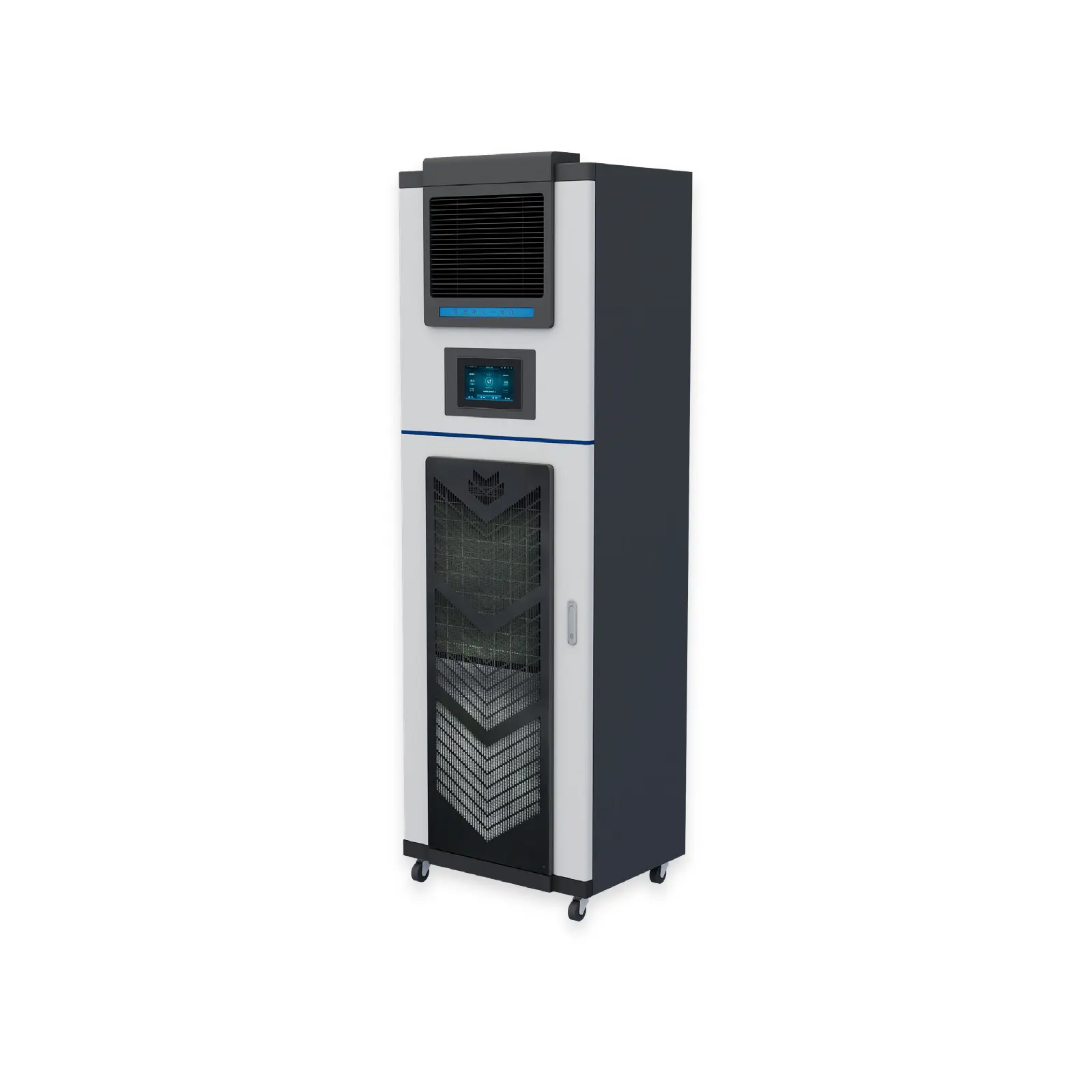
Stabilize archive-room humidity with a coordinated control layer that combines dehumidification, air purification, sensing and operating records around the actual room condition.
Representative product evidence from the archive environment equipment catalogue. Final unit selection depends on room volume, envelope condition, target humidity and required integration.
Humidity control is a room-design problem
An archive dehumidification system is not selected by cabinet appearance alone. The proposal should start with room volume, moisture sources, door opening frequency, air leakage, storage density and the environmental range required for the collection.
Define the target humidity band and acceptable fluctuation before equipment selection.
Coordinate sensing points, air circulation, condensate handling and maintenance access.
Connect local equipment status and alarms to the archive environmental monitoring layer where required.
Keep the storage aisle, equipment clearance and emergency route unobstructed.
Archive Dehumidification System Controls and Functions
This archive dehumidification system supports a constant-humidity and purification equipment family for archive rooms and technical spaces. The archive dehumidification system should be configured as a coordinated operating package rather than a single isolated appliance.
Humidity stabilityAdjust indoor air so humidity remains around the configured setpoint. The listed unit specifications describe humidity control around the configured setpoint with a stated ±5 tolerance; the applicable model and room conditions determine the final result.
Air purificationSupport circulation and filtration to reduce dust and airborne contamination risks that can accelerate deterioration or create poor working conditions.
Live condition dataCoordinate temperature, humidity and air-quality readings so operators can see trends, alarms and changes instead of relying on occasional manual checks.
Operating modesUse automatic, manual or scheduled operating logic where the selected equipment and control architecture support those modes.
Remote coordinationReserve interfaces for centralized monitoring, alarm forwarding and historical records when a project requires integrated archive-room management.
Maintainable installationAllow access for filters, drains, electrical isolation, sensor checks and service work without blocking collection handling routes.
Dehumidification belongs inside a four-layer control loop
Stable preservation conditions depend on the relationship between the room, the equipment, the sensors and the operating response. A correct page should make those boundaries clear.
01 / ROOMEnvelope and moisture loadRoom size, door cycles, leakage, occupancy and storage arrangement affect the required duty.
02 / EQUIPMENTDehumidification and purificationSelected units condition the air and require clearances, power and service access.
03 / SENSINGTemperature and humidity dataMeasurement points provide the evidence needed for automatic control and alarms.
04 / RESPONSERules and maintenanceOperators need thresholds, schedules, alarm ownership and a service routine.
Selection information for a project quotation
These are the inputs required to turn a catalogue product family into a room-specific proposal.
Input
Why it matters
What should be confirmed
Room envelope
Moisture ingress and heat gain change equipment duty.
Storage density and material format influence circulation and access.
Rack arrangement, cabinet layout, aisle width, box type and collection handling pattern.
Environmental target
A target without an acceptable fluctuation range cannot be controlled consistently.
Temperature/humidity target, tolerance, seasonal condition and alarm thresholds.
Integration
Local control and centralized monitoring require different interfaces.
Sensor locations, communication protocol, platform connection, alarm recipients and historical records.
Service conditions
Filters, drains and electrical access determine long-term usability.
Maintenance route, spare parts plan, condensate strategy and safe isolation points.
The catalogue evidence supports the equipment functions and control approach above. Final capacity, model, quantity and installation method must be confirmed against the actual room survey and project requirements. For collection-preservation planning, see the National Park Service Museum Handbook.
From room survey to operating system
01. SurveyRecord room size, envelope, moisture sources, existing HVAC, power and service routes.
02. Set the targetConfirm the environmental band, alarm rules and what must be visible to operators.
03. ConfigureMatch equipment, sensing points, air path, condensate handling and control interfaces.
04. Install and testCheck placement, airflow, sensor readings, alarms, schedules and safe operating behavior.
05. HandoverProvide operating logic, maintenance points, records and escalation ownership.
06. ReviewUse trend data and service observations to refine settings after the room is in use.
Questions buyers should settle early
Is this only a standalone dehumidifier?No. The product position is a room-level humidity-control system. It can include equipment, sensors, purification, alarms and centralized monitoring according to the project scope.
Can the unit be selected from room size alone?No. Room envelope, moisture load, door opening, storage density, target range and service conditions all affect the selection.
How is the result verified?Verify sensor placement, control response, alarm behavior and trend records during commissioning and early operation.
What is not promised on this page?Exact capacity, energy use, certification or universal performance is not assumed without a model-specific technical document and room survey.