Protect archive rooms, records and daily operations with a coordinated security scope.
Archive security begins with the room, the collection and the people who operate it. SAS helps define access, storage protection, movement safety, monitoring, water-risk response and operating responsibility around the approved archive project.
Security is a project boundary, not a single device
A secure archive is not created by adding a lock, camera or alarm in isolation. The security scope should explain what is protected, from which risk, by which control, for which user and with what response when something changes. It must also remain compatible with the storage layout and the owner’s building requirements.
Five layers of archive security
The final project should state which layers are included, which are coordinated by others and who owns the response after handover.
Match the control to the risk
Security planning becomes more useful when every control has a specific operating reason. The table below is a project-planning guide; it is not a substitute for the building owner’s security, fire or safety design.
| Risk or condition | Control direction | Question for the project team |
|---|---|---|
| Unauthorized entry or access outside working hours | Access permissions, restricted zones, visitor process and review of access records. | Who authorizes entry, and who investigates an access exception? |
| Loss or untracked removal of records | Lockable storage, item or location identification, issue-and-return procedure and custody responsibility. | Which archive unit must be traceable, and what happens when it is not returned? |
| Unsafe mobile shelving operation | Clear aisles, operator permissions, movement controls, safety devices and documented operating sequence. | Who may operate the system, and how is a blocked or unsafe condition stopped? |
| Water ingress or leakage near storage | Room inspection, water-risk monitoring scope, protected routing and an agreed response plan. | Where are vulnerable points, and who receives and acts on an alert? |
| Unclear incident response | Defined escalation contacts, records, inspection intervals, maintenance ownership and recovery procedures. | What evidence must be retained and how quickly should the owner respond? |
See the physical products that security planning must fit
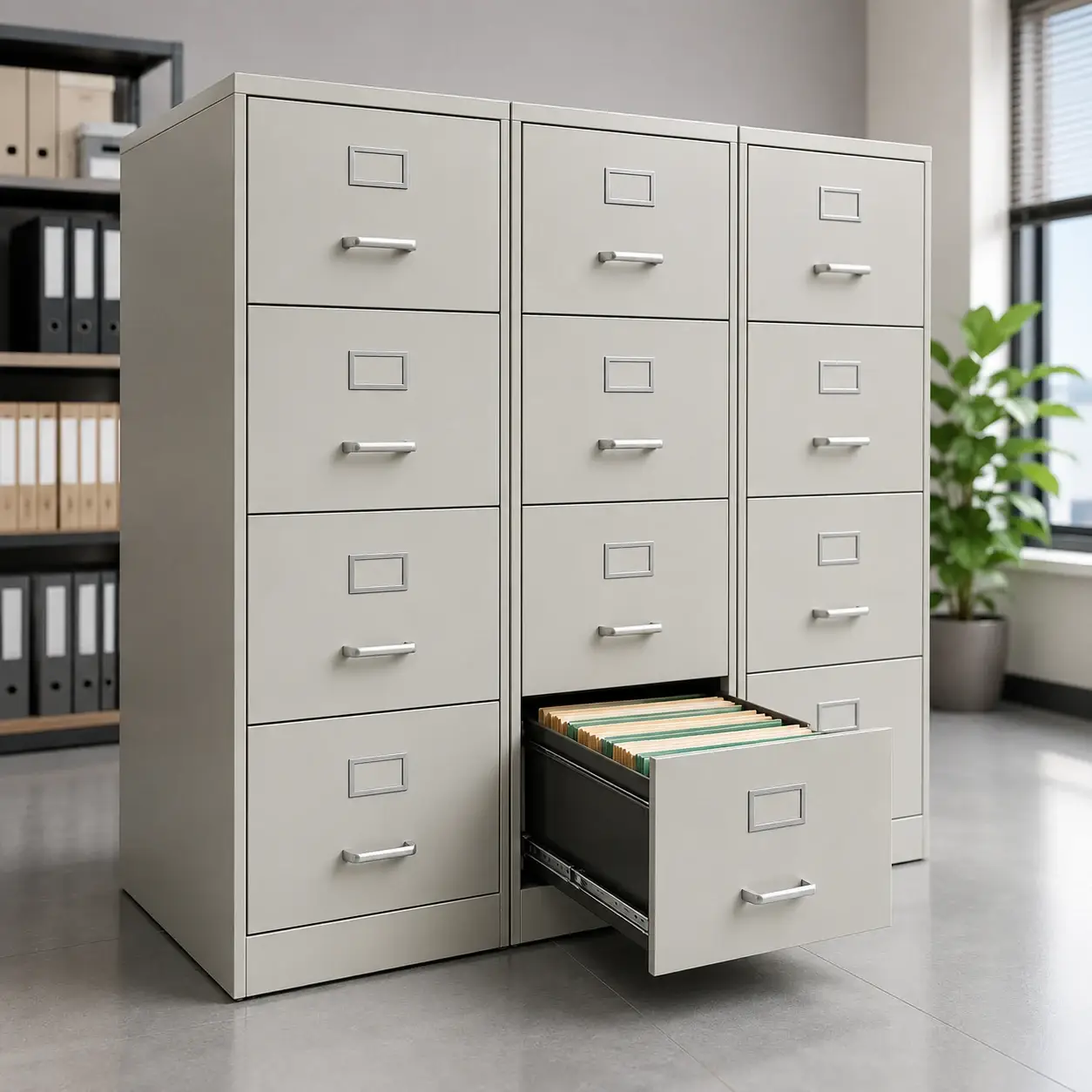
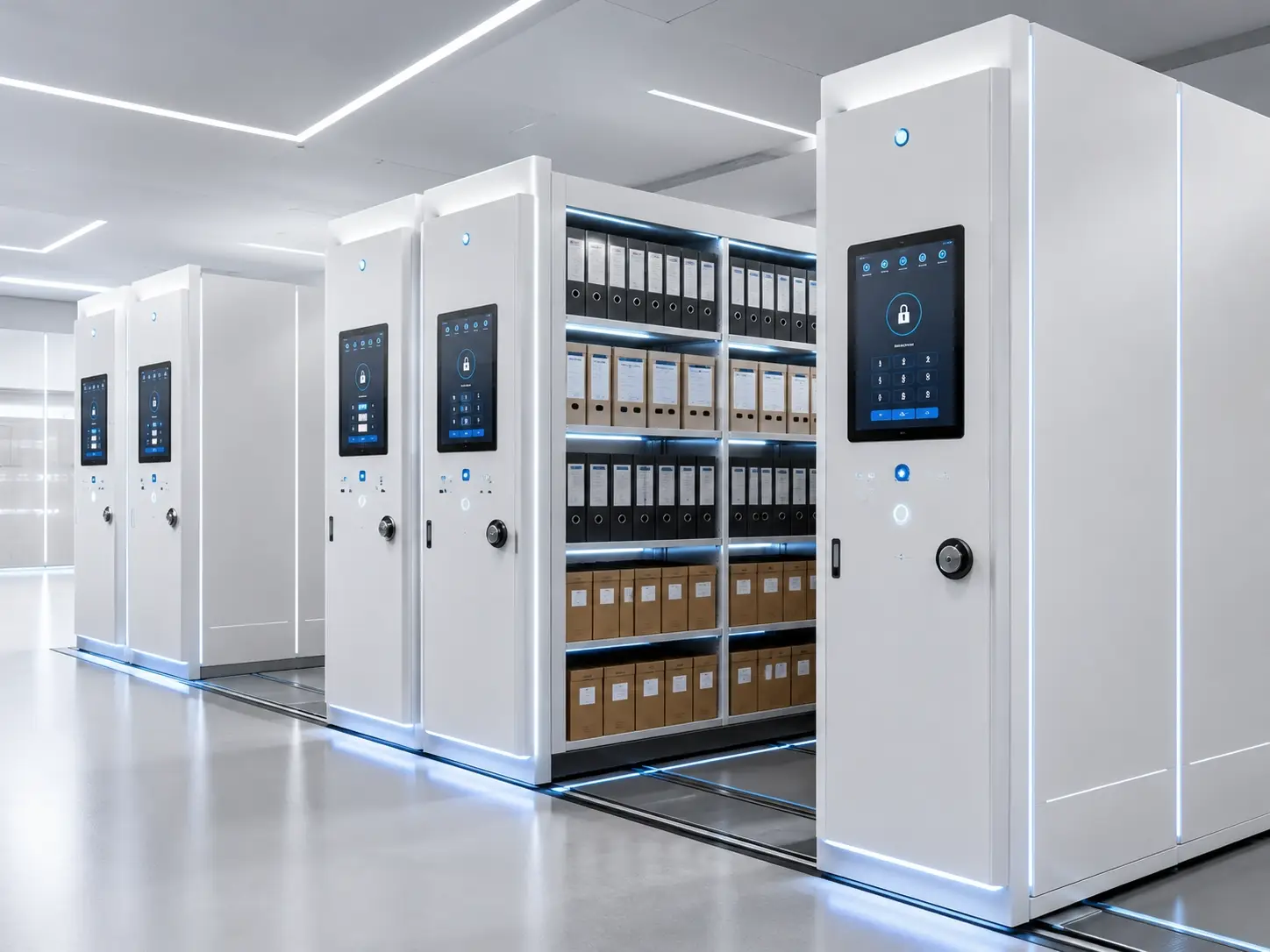
Security decisions should be reviewed with the actual storage equipment and operating environment. The images below are real SAS product materials used as physical context; access-control hardware, monitoring devices and final interfaces remain project-specific and must not be assumed from a product photograph.
Security system directions
How SAS develops the security scope
Information needed for a preliminary review
Archive Security Systems FAQ
Does SAS provide every security device shown in a typical archive project?
The final supply and integration scope must be confirmed project by project. SAS can define the archive-security requirements around storage and operation, but no camera, sensor, access-control or safety capability should be assumed without approved evidence and a stated responsibility.
Can access control be connected to archive storage operations?
It can be coordinated with user roles, restricted areas and operating procedures. The approved access-control design, authority and building interfaces must be confirmed by the project team.
How should water leakage risk be planned?
Start with room inspection, vulnerable points, storage clearance, routing and response ownership. The monitoring scope should state who receives an alert, who inspects the area and what protection or recovery procedure follows.
Can security planning include mobile shelving?
Yes. Movement permissions, aisle access, safety controls, emergency stop procedures and maintenance access should be reviewed with the actual shelving layout and control system.
Who approves the final security design?
The building owner and responsible technical professionals must approve security, fire, electrical, safety and local-code requirements. SAS can support the storage-related project brief and coordination.
What should be recorded after handover?
Keep access permissions, inspection records, maintenance actions, incidents, exceptions, training and changes to the room or storage arrangement under defined ownership.
Build security around the archive operation
Send the room plan, storage arrangement, user roles and risk priorities. SAS will help define a security scope that is practical, traceable and clear about technical responsibility.