
Library Book Storage
Library Shelving System for Schools, Universities and Public Libraries
SAS supplies steel library shelving system solutions for schools, universities, public libraries, corporate reading rooms and institutional book-storage projects.
Shelf height, bay width, shelf depth, number of levels, load capacity, side-panel design, color and layout can be adjusted according to the collection, reader group and room conditions.
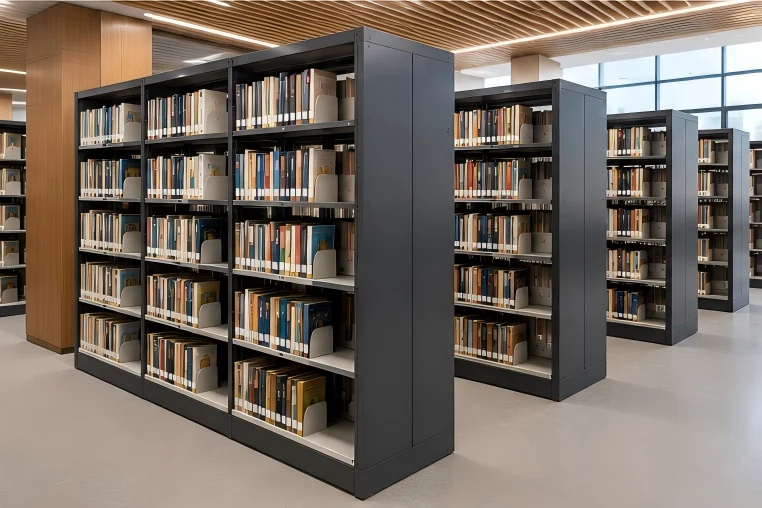
Open-Access Book Storage
What Is a Library Shelving System?
A library shelving system is a modular book-storage structure designed to organize collections while supporting browsing, classification, reader access and future changes in book quantity.
Single-sided units can use perimeter walls while double-sided shelving creates efficient central rows. Children’s shelving, periodical units and display shelving can be added to create different functional zones within one library.
Unlike high-density archive storage, standard library shelving normally keeps multiple aisles open so readers can browse several collection areas at the same time.
Library Shelving Configurations
Library Shelving System Types for Different Collection Areas
A complete library usually combines wall shelving, double-sided central rows, lower children’s units and selected display shelving instead of repeating one structure throughout the room.
Single-Sided Shelving
Installed against walls or room edges to use perimeter space while providing direct front access to books.
Double-Sided Shelving
Accessible from both sides and arranged in central rows to increase book capacity while supporting browsing from parallel aisles.
Children’s Shelving
Lower shelving heights, visible collections and optional forward-facing displays can make books easier for younger readers to browse.
Periodical Shelving
Sloped or front-facing panels present magazines and journals while selected designs can provide storage behind the display surface.
Display Shelving
Presents book covers toward the reader for new arrivals, recommendations, themed collections and temporary displays.
Mobile Library Shelving
Mobile shelving reduces the number of permanently open aisles and can increase storage density for staff-controlled, closed-stack or low-frequency book collections.
View Mobile Shelving System →Main Shelving Structure
Library Shelving Components That Influence Capacity and Accessibility
A practical steel library shelving system combines a stable frame, adjustable shelf levels, secure supports and clear identification. Side panels and signage also help readers understand the collection layout.
The main frame supports the shelf levels and connected bays. Height, bay width and reinforcement depend on shelving type and required load.
Shelf positions can be changed for standard books, journals, oversized publications and mixed collections, helping reduce unused vertical space.
Clips or brackets hold each shelf while allowing future reconfiguration according to changes in the collection.
Movable bookends, dividers or suitable supports help keep partially filled shelf sections organized.
Steel, perforated, open-frame, decorative or wood-look panels can finish row ends and provide space for category signage or library branding.
Shelf labels, row markers and base panels help classification, identification and the finished appearance of each shelving row.
Typical Technical Range
Library Shelving System Dimensions and Preliminary Specifications
Final shelving height, depth, bay width, number of levels, load capacity, fixing method and aisle layout should be confirmed against the collection, reader group and room conditions.
Selection Logic
How to Choose a Library Shelving System
Book dimensions, collection growth and reader group influence shelf depth, number of levels, row type and overall shelving height.
A visually attractive shelf still performs poorly if books overhang excessively, usable shelf depth is wasted or upper levels are impractical for the intended readers.
Confirm the Book Types
Identify standard books, textbooks, journals, children’s books, oversized publications, reference volumes or mixed materials.
Measure Book Dimensions
Confirm average and maximum book height and depth so shelf spacing and depth match the collection.
Estimate Current and Future Capacity
Use current book quantity, approximate linear shelf demand and expected collection growth to reserve realistic expansion capacity.
Define the Reader Group
Children, students, researchers and staff-only users can require different shelving heights and accessibility arrangements.
Select Wall or Central Shelving
Single-sided shelving uses perimeter areas, while double-sided units provide more book capacity in central rows.
Confirm Shelf Load
Reference books, technical manuals and bound volumes may require stronger shelves or a different structural configuration.
Plan for Reconfiguration
Adjustable shelf positions help accommodate new categories and changing book sizes without replacing the complete shelving system.
Check Installation Conditions
Review ceiling height, columns, doors, transport routes, floor condition and on-site assembly access before confirming the final layout.
Library Layout Planning
Plan Library Shelving Around Capacity, Browsing and Reader Circulation
A library layout should coordinate shelving rows, wall storage, reading areas, service points and required circulation space rather than maximizing the number of bays alone.
Shelving Comparison
Single-Sided vs Double-Sided Library Shelving
Many complete library shelving system projects use both. The correct proportion depends on room shape, wall availability, central circulation and required book capacity.
Single-Sided Shelving
Double-Sided Shelving
Fixed or Mobile Storage
Library Shelving System vs High-Density Mobile Shelving
Fixed library shelving is designed primarily for open browsing and simultaneous access. Mobile shelving is designed primarily to reduce permanent aisle space and increase storage density.
Fixed Library Shelving
Mobile Shelving System
Choose the Correct SAS Page
Library Books, University Archives and High-Density Collections Have Different Storage Needs
Use this Library Shelving System page for open-access book shelving and reading collections. Use the University Archive page for institutional records and academic archives, and the Mobile Shelving page for higher-density closed-stack storage.
Material and Customization
Customize the Library Shelving System Around Books and Interior Design
Different shelving components may require different steel thicknesses according to shelf width and loading. Side panels, signage, book supports and color combinations can also support the visual identity of the library.
Library Applications
Library Shelving Systems for Educational, Public and Institutional Collections
School Libraries
Textbooks, reading books, teaching materials and student collections.
University Libraries
Academic books, journals, research publications and reference collections.
Public Libraries
Adult collections, children’s books, periodicals, multimedia and local resources.
Children’s Libraries
Lower shelving, visible book displays and easy-to-browse collection zones.
Corporate Libraries
Manuals, standards, technical publications and training resources.
Government Libraries
Regulations, reports, reference publications and departmental collections.
Research Centers
Specialist books, journals, bound reports and controlled research materials.
Training Centers
Course materials, catalogues, manuals and supporting reference books.
Manufacturing and Quality
Details That Influence Library Shelving Stability and Long-Term Performance
Frame Accuracy and Connection
Consistent punching, forming and bay connections help shelving rows remain aligned across long wall runs and central aisles.
Shelf Flatness and Support
Shelves, supports and reinforcement should remain stable under the intended loading while still allowing practical height adjustment.
Edges, Coating and End Panels
Finished edges, consistent powder coating and correctly installed end panels support practical installation and a professional library appearance.
Packaging and Installation
Modular Packing and Numbered Components for On-Site Assembly
Library shelving is commonly supplied in knock-down or modular form. Frames, shelves, supports, panels and hardware can be grouped and identified according to project and installation requirements.
Quotation Checklist
Information Needed for a Library Shelving System Quotation
When the exact layout is not confirmed, send the room plan, library type, approximate collection quantity and preferred shelving arrangement. SAS can prepare a preliminary configuration for review.
Frequently Asked Questions
Library Shelving System FAQ
What is a library shelving system?
A library shelving system is a modular storage structure used to organize books, journals and other library materials while supporting classification, browsing and future collection changes.
What material is used for a library shelving system?
Library shelving is generally manufactured from cold-rolled steel with a powder-coated surface. Final material configuration depends on shelf width, shelving height, structural design and required load.
Are library shelves adjustable?
Yes. Adjustable shelves allow the spacing to be changed for books and publications of different heights.
What is the difference between single-sided and double-sided library shelving?
Single-sided shelving is normally positioned against a wall and accessed from one side. Double-sided shelving is normally used in central rows and accessed from both sides.
How many shelf levels are normally used?
Common preliminary configurations use approximately four to seven shelf levels. The final number depends on overall shelving height, book dimensions and practical reader access.
How much weight can a library shelf hold?
Typical reference loading may be approximately 30–80 kg per shelf depending on shelf width, supports, reinforcement and structural configuration.
Can SAS supply children’s library shelving?
Yes. Lower shelving, front-facing display options, project-selected colors and children’s book-storage configurations can be discussed according to the collection and room.
Are decorative end panels available?
End panels can use steel, perforated, open-frame, decorative or wood-look configurations according to the approved project design.
Can mobile shelving be used in a library?
Yes. Mobile shelving can be considered for closed-stack, staff-controlled or lower-frequency collections where higher storage density is more important than simultaneous public browsing.
Can SAS help design a library shelving system layout?
Yes. Send the room dimensions or floor plan, book quantity, collection type, reader group and preferred shelving configuration for preliminary layout planning.
Related SAS Pages
Continue Planning Your Library and Archive Storage Project
Project-Based Quotation
Need a Library Shelving System Quotation?
Send your library type, room dimensions or floor plan, book dimensions, collection quantity, preferred shelving configuration, shelf levels, color and destination. SAS can help prepare a preliminary library shelving layout and quotation basis.