Archive Storage Configurations
Archive Storage Configurations Built Around What You Store
Archive storage configurations should begin with the stored material—not with a generic cabinet or shelving model. Files, archive boxes, vouchers, drawings, books and mixed institutional records can require different shelves, dividers, drawers, compartments and storage systems.
SAS uses stored-item dimensions, quantity, weight, access frequency and room conditions to determine the appropriate internal structure and product route.
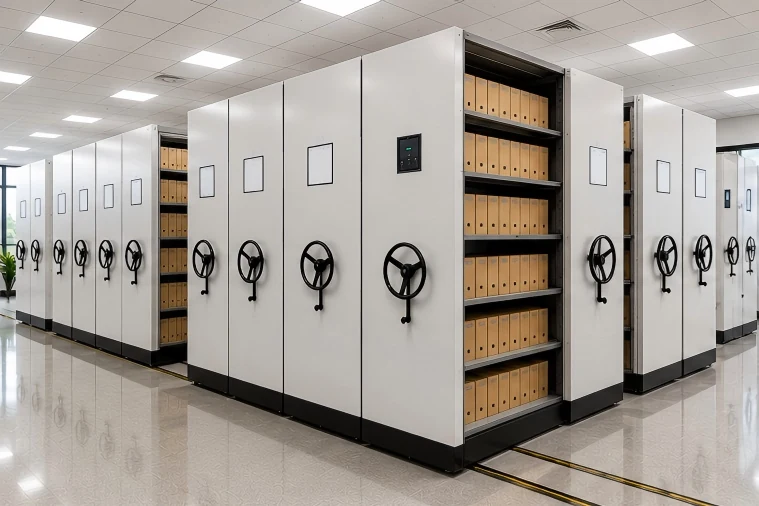
Confirm the document format, dimensions, weight, access frequency and classification method.
Select shelves, dividers, drawers, compartments or other project-specific modules.
Route the requirement to cabinets, fixed shelving or manual, electric or smart mobile shelving.
Configuration Families
Archive Storage Configurations for Different Record Types
These are planning routes rather than universal standard models. Final dimensions, loading and accessories should be confirmed for the project.
File & Document Storage
For archive boxes, folders, binders, case files and other document collections stored on adjustable shelves.
- Adjustable shelf spacing
- Book supports and dividers
- Single- or double-sided storage faces
Voucher & Ledger Storage
For accounting vouchers, receipts, tax records, bound ledgers and other financial documentation.
- Shelf spacing selected around actual files
- Classification by year, department or batch
- Drawer or compartment options where suitable
Drawing, Blueprint & Map Storage
For engineering plans, maps, drawings and other large-format materials that may not fit standard archive shelves.
- Flat or wide storage where required
- Rolled-document storage where appropriate
- Project-specific clear internal dimensions
Book, Newspaper & Periodical Storage
For books, bound newspapers, journals, reports and institutional publications.
- Adjustable shelves and book supports
- Shelf load confirmed for heavier volumes
- Fixed or high-density storage route
Framed & Special-Format Storage
For selected framed, hanging or unusual-format materials where standard horizontal shelving is not suitable.
- Project-specific hanging or support structure
- Protected spacing between stored items
- Room and object conditions reviewed first
Mixed Internal Configurations
For projects containing several record formats that require more than one internal storage structure.
- Multiple structures within one archive project
- Open and lockable sections
- Separate load and access zones
Product Routing
Not Every Archive Storage Configuration Belongs Inside Mobile Shelving
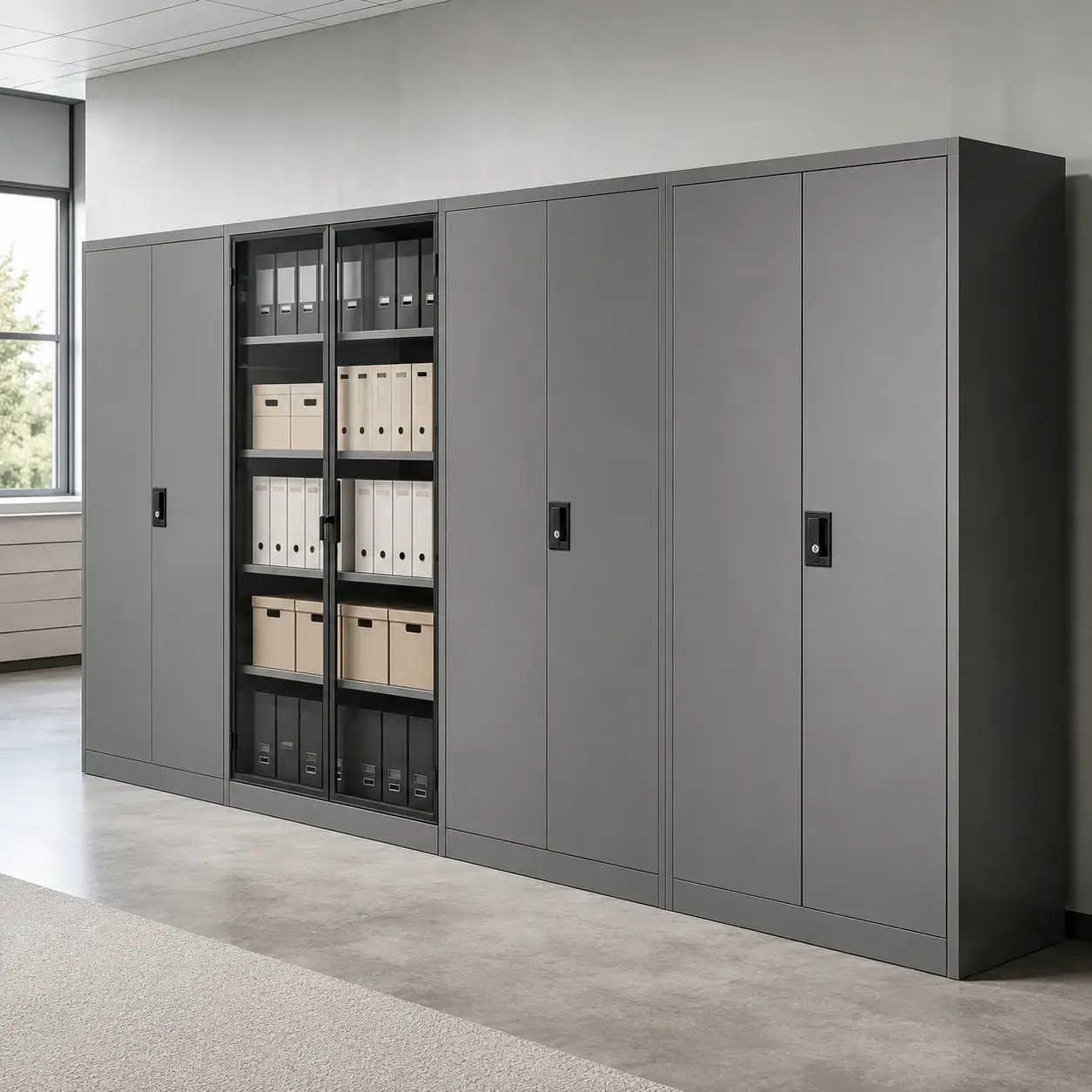
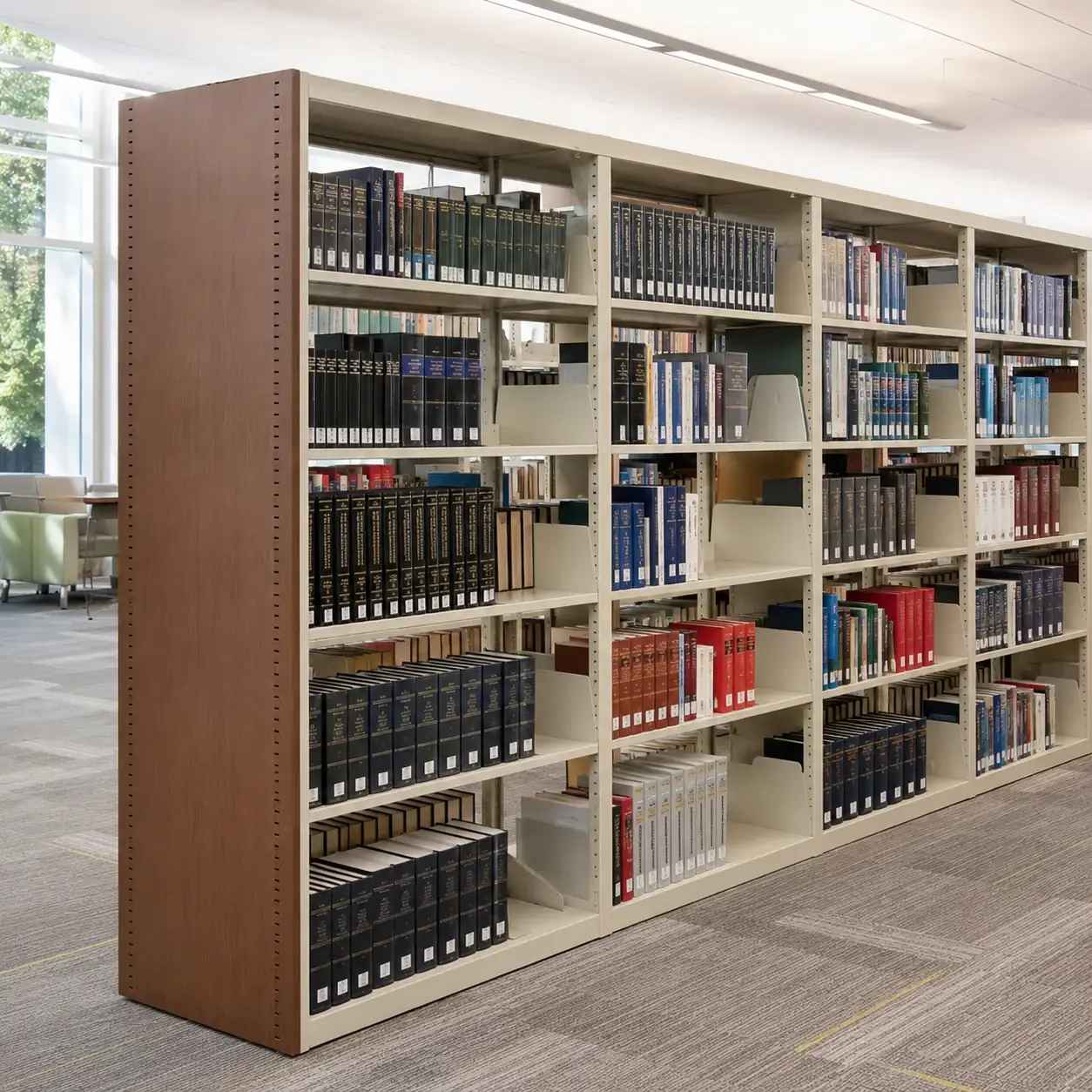
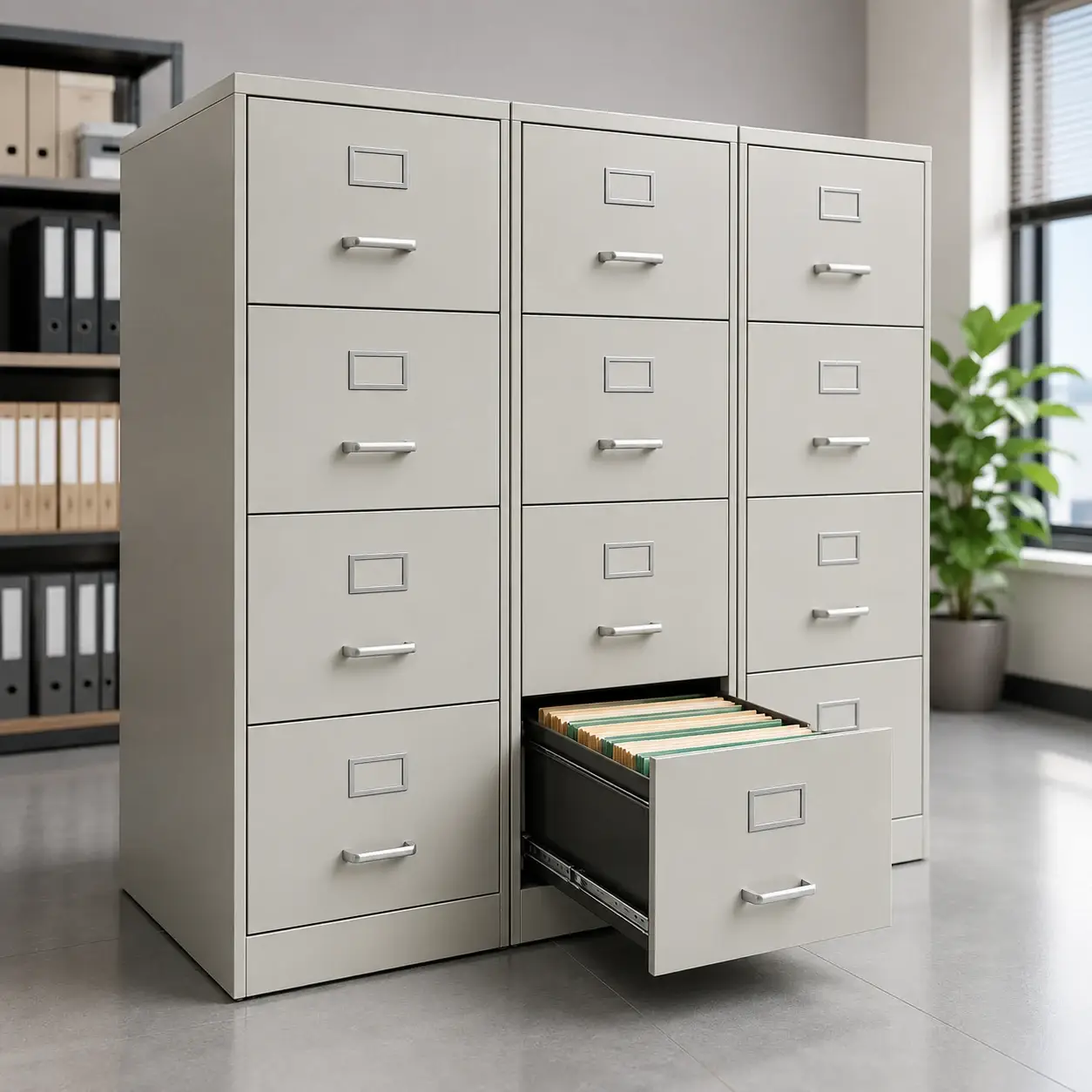
A complete archive room may combine mobile shelving, archive cabinets, filing cabinets and fixed shelving. The product route should follow record volume, access frequency and the stored-item format.
Best for higher-volume records where reducing permanent aisles can increase room storage density.
View Mobile Shelving →Best for enclosed storage of binders, boxes and mixed shelf-based documents.
View Archive Cabinets →Best for active categorized office records and frequently retrieved folders.
View Filing Cabinets →Best for open-access books, periodicals and collections where several users need simultaneous browsing access.
View Library Shelving →Internal Structure Options
Structural Elements Used in Archive Storage Configurations
These elements can be used individually or combined. Final compatibility depends on internal dimensions, loading, product structure and the approved project drawing.
Adjustable Shelves
Support archive boxes, folders, binders, books and general documents with project-confirmed shelf depth and clear height.
Book Supports & Dividers
Keep upright files or books organized while allowing the spacing to follow the actual stored-item format.
Drawer Storage
Can be considered for selected vouchers, maps, drawings and categorized records that are not suitable for open shelves.
Project-Specific Hanging Structure
Can be evaluated for selected hanging or framed materials when object dimensions and system compatibility are confirmed.
Lockable Compartments
Separate confidential or restricted records from general archive material where additional physical access control is required.
Combination Modules
Combine shelves, drawers, enclosed sections or other approved structures when one archive contains several record formats.
Operating Level
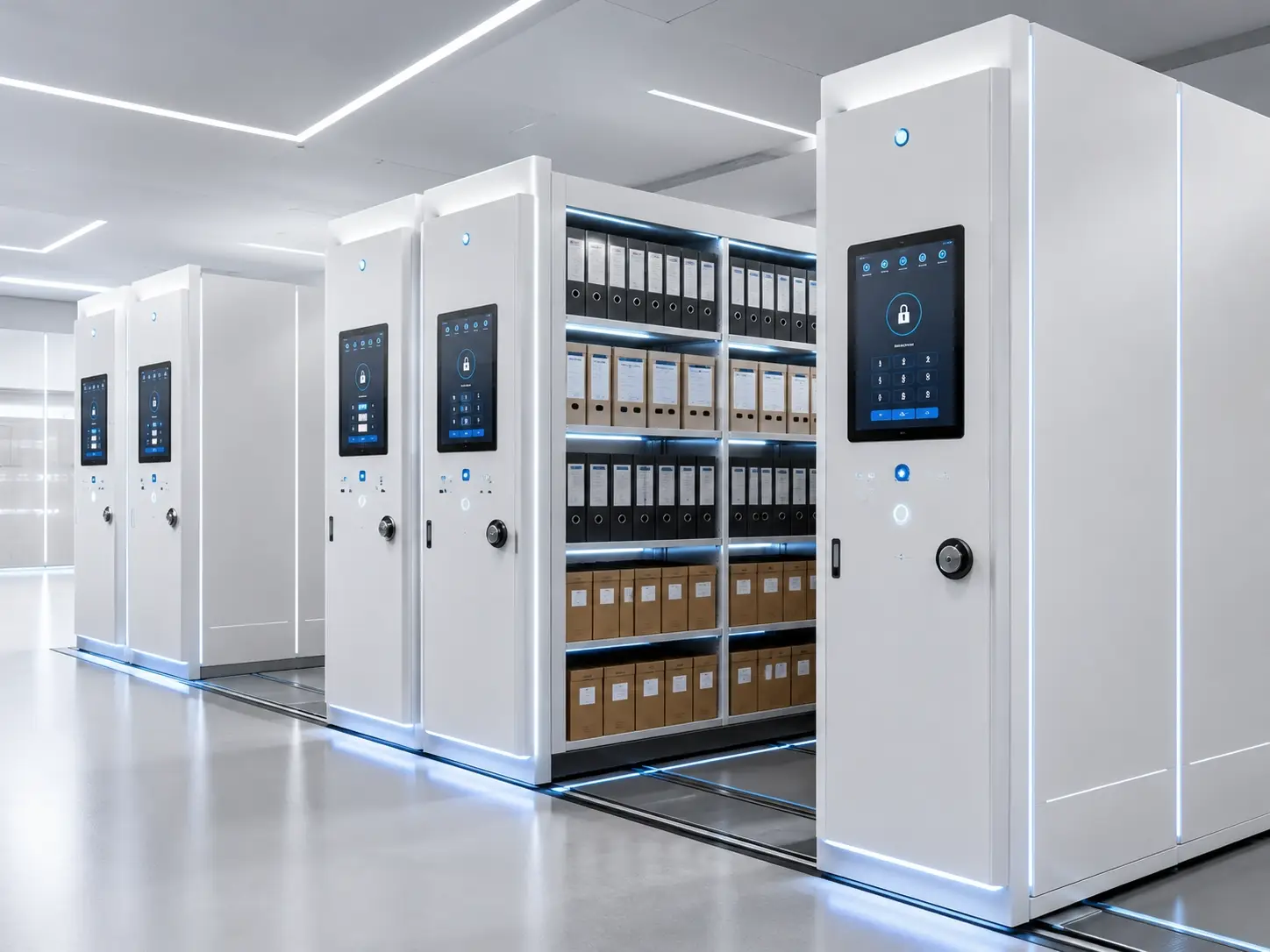
Choose Manual, Electric or Smart Operation After the Storage Structure Is Defined
The operating method mainly changes how mobile shelving moves, how users control it and what project-specific safety or management functions are required. It does not replace the need to design the shelving interior around the stored material.
Selection Matrix
Preliminary Archive Storage Configuration Logic
Use this matrix for early discussion only. Final structure, dimensions and product selection should follow actual stored-item data, room conditions, load requirements and the approved project configuration.
| Stored Material | Possible Internal Structure | Main Design Check | Possible Product Route |
|---|---|---|---|
| Archive boxes and binders | Adjustable shelves, supports and dividers | Box depth, usable shelf width, shelf load and future growth | Mobile shelving or archive cabinet |
| Vouchers and financial records | Dense shelves, compartments or selected drawer arrangements | Document size, filing direction and retrieval routine | Mobile shelving, archive cabinet or filing cabinet |
| Bound ledgers and registers | Adjustable or reinforced shelves according to load | Weight per shelf and practical handling height | Mobile shelving or fixed storage |
| Drawings and maps | Wide compartments, selected drawer storage or project-specific structure | Largest document size and handling clearance | Archive cabinet or custom project configuration |
| Books and periodicals | Adjustable shelves and book supports | Book depth, shelf pitch, loading and public access | Library shelving or mobile shelving |
| Framed or special-format materials | Project-specific support or hanging structure where suitable | Object dimensions, weight, spacing and room conditions | Project-specific fixed or mobile configuration |
| Mixed institutional records | Combination of shelves, drawers and lockable sections | Separate access zones, load requirements and record categories | Project-specific product mix |
Configuration Process
From Stored-Item Data to an Approved Storage Configuration
Classify the Records
Separate active, inactive, confidential, oversized, heavy and special-format materials.
Measure the Stored Items
Confirm height, width, depth, approximate weight, filing orientation and current quantity.
Choose the Internal Structure
Select shelves, dividers, drawers, enclosed sections or other approved modules.
Choose the Product Route
Assign each record group to mobile shelving, archive cabinets, filing cabinets or fixed shelving.
Review the Room Layout
Check rows, bays, aisles, doors, columns, floor conditions and usable clearances.
Choose the Operating Method
Compare manual, electric and smart operation according to access and project requirements.
Confirm Technical Details
Confirm dimensions, shelf loading, locks, controls, finish and required accessories.
Define the Delivery Scope
Clarify packing, destination, rail work, installation, commissioning and documentation responsibilities.
Project Information
Information Needed for an Archive Storage Configuration Proposal
A product photo alone is rarely enough to determine the correct internal structure. Send the stored-item and room information available so the configuration can be based on the actual project.
Recommended Inquiry Package
For a faster preliminary review, send the documents and information already available.
- Room drawing, CAD, PDF plan or measured sketch
- Photos or examples of the stored materials
- Current quantity and expected future growth
- Required classification or retrieval workflow
- Preferred manual, electric or smart system
- Destination country and installation expectations
Frequently Asked Questions
Archive Storage Configurations FAQ
What are archive storage configurations?
Archive storage configurations describe how shelves, dividers, drawers, enclosed sections and different storage products can be selected according to the actual files, boxes, books or other records being stored.
Is Archive Storage Configurations a single SAS product?
No. This page is a selection hub. A project may use mobile shelving, archive cabinets, filing cabinets, library shelving or a combination of different storage products.
Can one mobile shelving system use different internal structures?
Mixed structures can be considered when their dimensions, load distribution, operating clearances and manufacturing compatibility are confirmed in the project design.
Should drawings and maps use normal archive shelves?
Not always. Large drawings or maps may require wider compartments, selected drawer storage or another project-specific structure depending on their size and retrieval method.
Can shelves and drawers be changed after installation?
Adjustable shelves can generally be repositioned within the designed shelf pitch. Drawers and other special modules are more project-specific and should normally be confirmed before production.
Does smart mobile shelving change the internal storage structure?
Not necessarily. Smart control mainly changes powered operation and the project-defined control layer. The internal shelving structure still needs to be designed around the stored material.
Is RFID required for a smart archive storage configuration?
No. RFID is not required for smart mobile shelving. Identification or external integration should only be included when the project has a defined requirement and the technical method is confirmed.
Can SAS help plan a mixed archive room?
Yes. SAS can review the room, stored materials and access requirements and discuss a preliminary mix of mobile shelving, archive cabinets, filing cabinets or fixed shelving.
Start With the Stored Records
Send the Stored-Item Dimensions and Room Plan
SAS can use the available information to discuss a preliminary archive storage configuration, product route and room-layout direction for fixed, manual, electric, smart or mixed storage projects.