Archive Storage System Manufacturing Capability
SAS archive storage projects are supported by established manufacturing and engineering resources covering steel shelving structures, mobile bases, mechanical drive systems, electrical controls, smart-system integration and final system assembly. Production follows the confirmed project configuration rather than treating archive shelving as a standard off-the-shelf product.
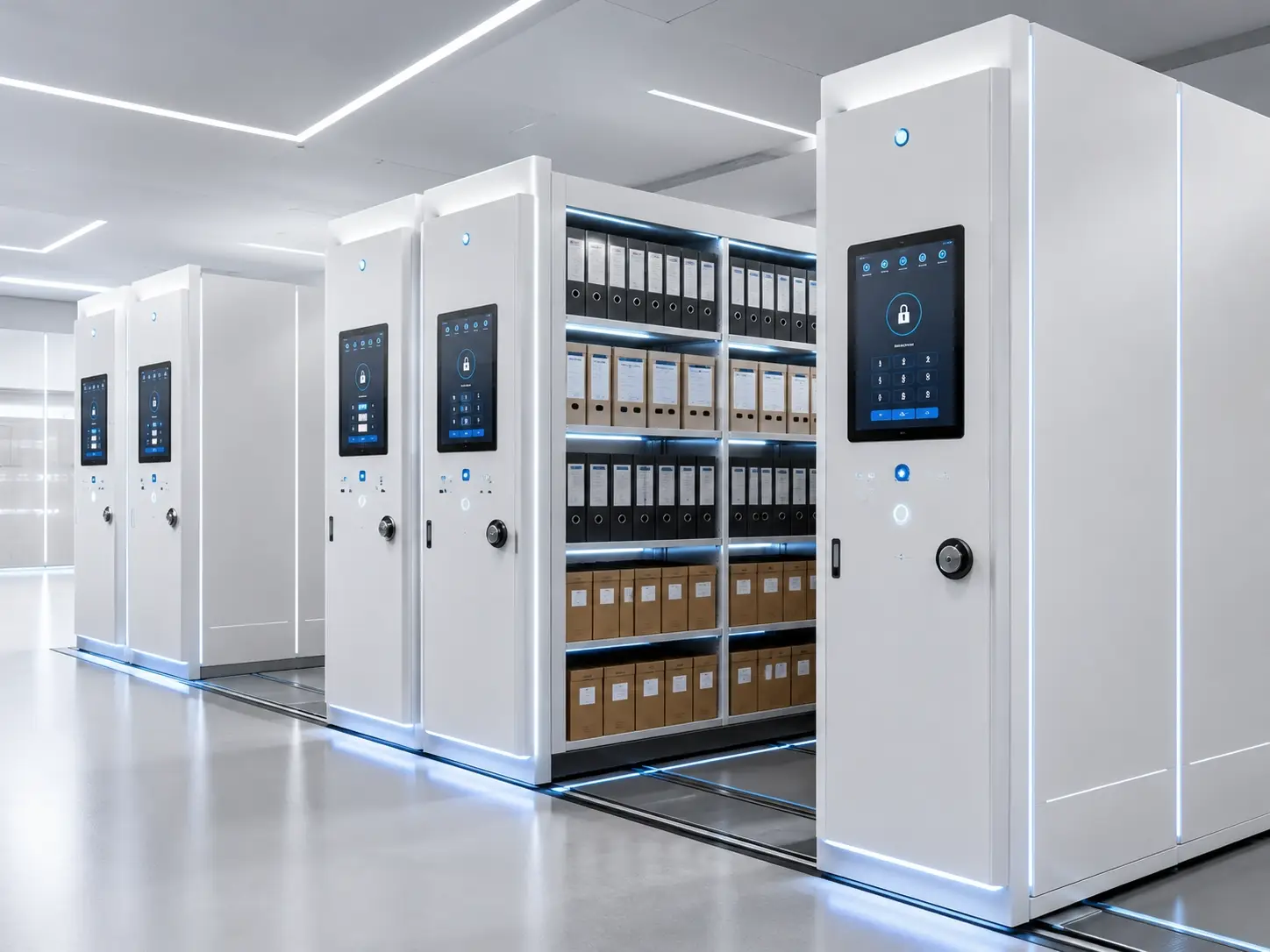
Shelving structure, rails, moving bases, drive components, sensors and control hardware must work together after installation.
Manufacturing begins after the storage system is defined
Archive storage projects vary in room dimensions, row length, shelving depth, shelf levels, access aisles, operating method, load requirements and control functions.
For that reason, mobile shelving manufacturing should follow the approved room layout and system configuration. Structural parts, moving bases, rails, transmission components and control equipment are coordinated around the final project design.
Key dimensions, row configuration, rail arrangement, operating method and required functions should be confirmed before production begins.
Steel Shelving Structure
Uprights, shelves, panels and reinforced bases are configured around the selected storage dimensions and loading requirements.
Rail & Mobile Base
Rails, wheels and mobile chassis form the physical platform responsible for travel accuracy and load transfer.
Mechanical Transmission
Shafts, chains, sprockets, bearings and braking components are coordinated with row length, load and operating method.
Electrical Integration
Motors, sensors, controllers and user interfaces are integrated with the physical shelving and project safety logic.
Production resources built for large archive-storage projects
The manufacturing and project-delivery resources supporting SAS storage systems combine large-scale production infrastructure, automated equipment, engineering resources and accumulated archive project experience.
m² Manufacturing & R&D Infrastructure
Production and development resources support mechanical archive equipment, control systems and related smart archive technologies.
Projects Supported Annually
Standardized project-delivery experience supports repeated production, configuration management and multi-project execution.
Accumulated Project Delivery Experience
Long-term archive project experience provides a practical manufacturing reference for different storage environments and system configurations.
These figures describe the established manufacturing, engineering and project-delivery resources supporting SAS archive storage projects and provide context for system capability rather than standard product specifications.
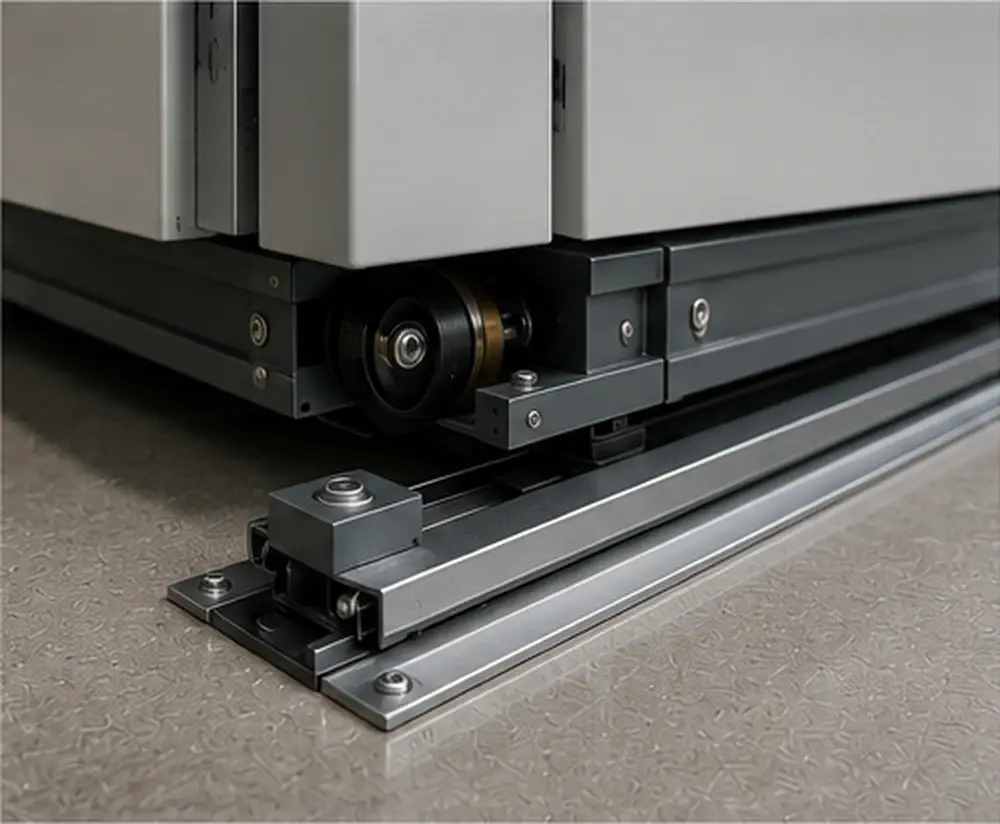
The steel platform determines how the complete system performs
Mobile shelving depends on more than visible shelves and side panels. The rail system, reinforced base, uprights, shelving body, wheel arrangement and transmission mounting points must maintain consistent geometry across every moving row.
Structural components are therefore produced around confirmed project dimensions so that shelving alignment, shelf spacing, carriage movement and assembly relationships remain consistent during installation.
Movement depends on coordinated mechanical components
A mobile shelving system is not simply a steel cabinet installed on rails. Loaded rows must move predictably while maintaining structural alignment and controlled access.
Transmission layout, wheel guidance, braking and anti-tilt provisions therefore need to be considered as parts of one movement system.
Shaft, Chain & Sprocket
Mechanical transmission components transfer operator or motor input across the moving base and help keep row movement coordinated.
Wheel & Rail Alignment
The wheel and rail relationship affects travel stability, guidance accuracy and the way shelving loads are transferred.
Braking & Positioning
Movement must stop in a controlled position so that the selected aisle remains usable and the system stays predictable.
Anti-Tilt & Emergency Operation
Mechanical safety provisions support stable movement and provide practical recovery options when normal powered operation is unavailable.
Smart control is integrated with the mechanical shelving platform
Electric and intelligent mobile shelving adds motors, controllers, sensors, user interfaces and safety logic to the physical storage system. These functions must coordinate with the actual moving rows rather than operate as unrelated accessories.
The final control package depends on the selected operating method, safety requirements and project scope. A basic powered system may require straightforward movement control, while a smart archive installation can add touchscreen operation, status display, permissions and approved system interfaces.
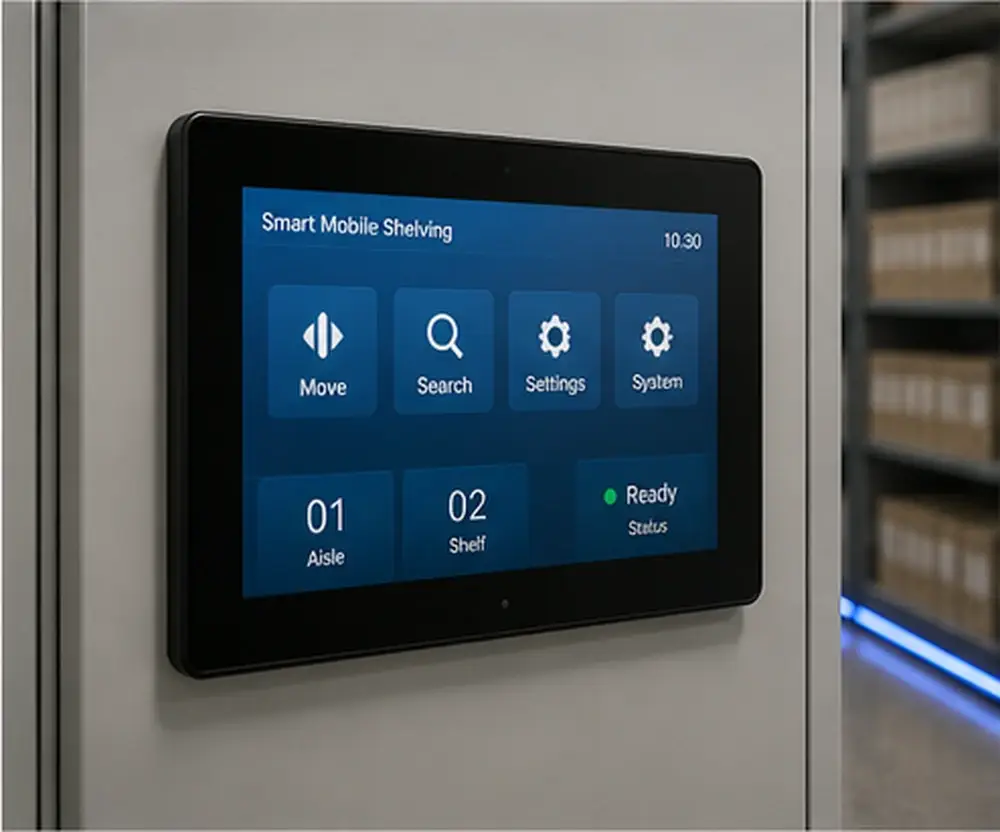
Mechanical movement, sensor status and user commands are coordinated through the selected control architecture.
Quality control should verify the complete storage system
Archive shelving quality is affected by dimensional accuracy, structural alignment, mechanical movement, electrical response and final assembly. Production review therefore focuses on the relationships between these elements rather than appearance alone.
Dimensional Review
Component dimensions, hole positions, shelving alignment and rail-fitting relationships.
Movement Review
Travel, transmission response, braking and mechanical safety relationships.
Control Function Review
Motor operation, controller response, sensors, emergency stops and configured control functions.
Assembly & Operating Check
Overall fit, operating stability, safety functions, surface condition and project identification.
From approved project information to a finished storage system
Project-based production connects engineering decisions with manufacturing. Important dimensions and functions are confirmed before components move into production and system assembly.
Requirements Confirmed
Room information, stored materials, target capacity, operating method and project requirements are clarified.
Engineering Configuration
Row quantities, bays, shelf levels, rail arrangement, structure and operating system are defined.
Drawing Approval
Key dimensions and technical configuration are checked before manufacturing begins.
Component Manufacturing
Steel structures, mobile bases and required mechanical components are prepared according to the approved project configuration.
Integration & Testing
Mechanical, electrical and safety functions are reviewed according to the selected system scope.
Packing Preparation
Components can be organized and identified around the final project arrangement before shipment preparation.
Manufacturing adapts to the approved archive-room solution
Storage rooms are rarely identical. Available floor area, room geometry, archive quantity, document format, access frequency and operating responsibility can all change the final equipment configuration.
The purpose of project-based manufacturing is therefore not to force every buyer into one standard shelving specification. It is to produce a defined storage system around the confirmed project basis.
Different Room Dimensions
Row length and arrangement can change according to available width, length, doors, columns and usable storage zones.
Different Shelf Configurations
Bay quantity, shelf levels and internal dimensions depend on stored materials and required capacity.
Manual, Electric or Smart
The movement and control system can be selected according to user frequency and project responsibility.
Site & Structural Conditions
Rail arrangement, installation method and layout need to reflect floor and building conditions.
Project Safety Functions
Locks, emergency stops, detection and other protection functions are confirmed according to system scope.
Smart Control Options
Touchscreen, lighting, permissions and approved integration functions can be configured where required.
Connect manufacturing with product and project planning
Review the system structure, archive-room planning requirements and available mobile shelving configurations before defining the final project specification.
Common questions about archive storage system production
Final manufacturing details depend on the approved project configuration, room conditions and selected operating system.
Is mobile shelving manufactured only in standard sizes?
What should be confirmed before manufacturing begins?
Can the same manufacturing system support manual, electric and smart shelving?
Why are the rail and mobile base important to manufacturing quality?
Are smart control functions identical for every project?
Planning a Mobile Shelving or Archive Storage Project?
Send SAS your room dimensions, floor plan, stored-item information, target capacity and preferred operating method. The available project information can be used to begin configuration and quotation discussion.