Make archive storage safer to operate, inspect and maintain.
A Safety Protection System brings together safe movement, clear access, emergency response, equipment protection and maintenance responsibility. SAS helps connect the storage system with the archive room and the building’s responsible technical team.
Safety protection system planning must work during normal operation and exceptions
Archive safety includes the everyday actions that keep staff, records and equipment protected: opening an aisle, moving a row, retrieving a box, servicing a control point, responding to an obstruction or restoring the room after an incident. The project should define these situations before the equipment is accepted. Review the archive security systems alongside the storage layout and operating procedure.
Four layers of safety protection
The final safety brief should state the control, the normal condition, the prohibited action, the response and the responsible person.
Plan safety around the actual operating condition
| Operating condition | Safety planning emphasis | Question to resolve |
|---|---|---|
| Opening or closing an aisle | Clear route, operator authority, movement status, obstruction check and controlled access. | How does the operator know the aisle is safe to use? |
| Moving mobile shelving rows | Control interface, emergency stop, interlocks or other approved safety measures and user training. | Who may move the row, and what happens when the system detects an unsafe condition? |
| Maintenance or inspection | Isolation, service access, lighting, tools, contractor control and return-to-service check. | Who authorizes work and confirms the system is safe afterward? |
| Emergency or power interruption | Emergency release, safe access, communication, recovery and incident records. | What can staff do safely, and when must the responsible technical team take over? |
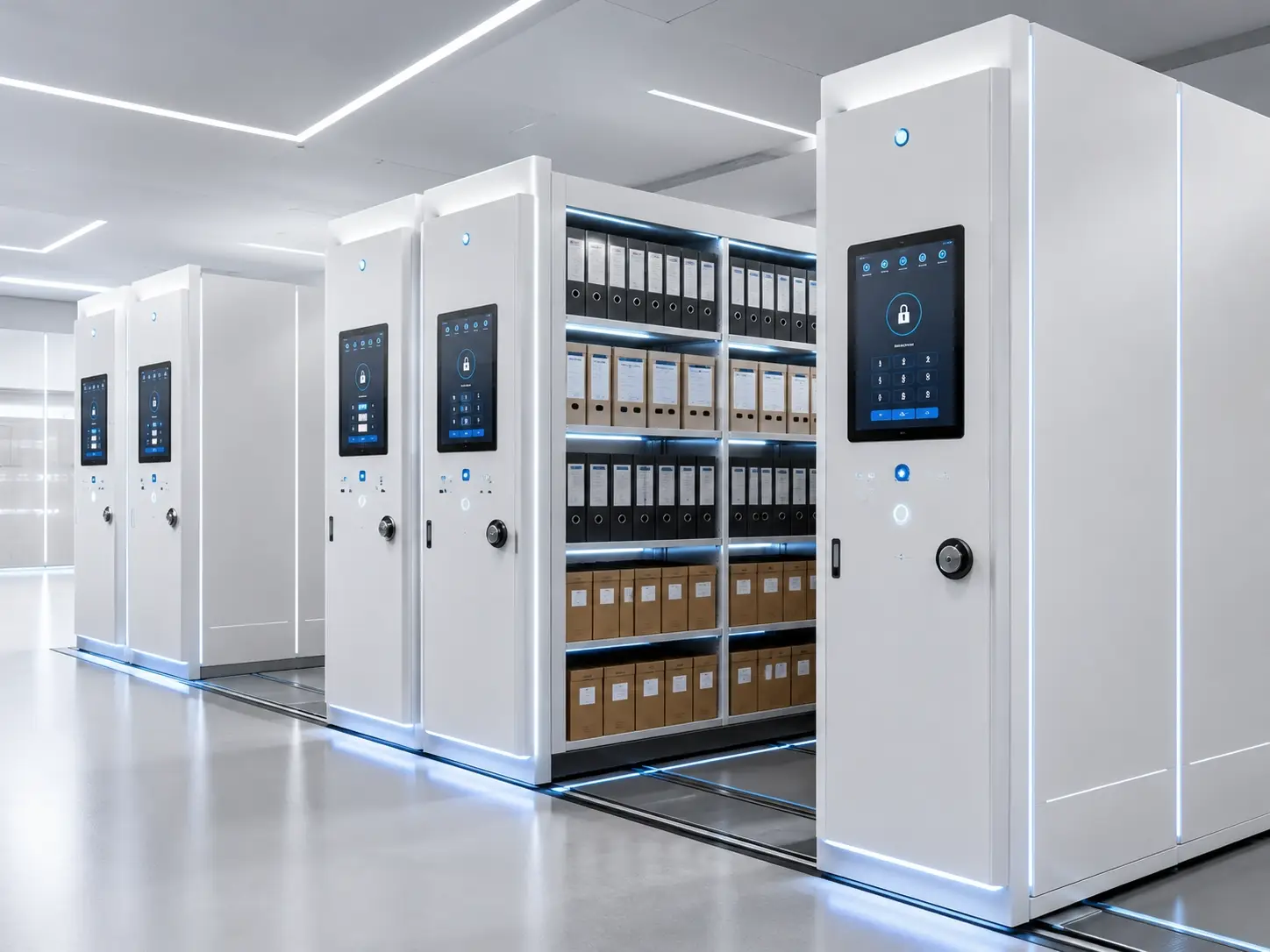
See the physical safety context
Safety features must be reviewed on the actual equipment and in the actual room. SAS product materials can show the physical control context, but the final safety package depends on the approved configuration, building conditions and responsible technical review.

Project development sequence
Information needed for a preliminary review
Safety Protection FAQ
Does the safety system replace a building safety design?
No. Storage safety must be coordinated with the building owner’s fire, electrical, emergency, structural and local-code requirements and the responsible technical professionals.
What safety features are relevant to mobile shelving?
Relevant topics may include clear aisles, controlled movement, emergency stop or release, obstruction protection, operator permissions, lighting, rails, bases, inspection and maintenance. The final package depends on the approved configuration.
Who may operate the system?
The owner should define trained operators, supervisors, service personnel and emergency access, with permissions and procedures that match the equipment.
How should maintenance access be controlled?
Use an approved service procedure covering isolation, authorization, contractor control, inspection, test, records and return to service.
What should happen after an incident?
Protect people first, stop or isolate the affected equipment when safe, notify responsible teams, record the event, inspect the system and approve return to service before normal operation.
Make the storage system safe to operate
Send the room plan, storage layout and operating workflow. SAS will help define safety controls, procedures and responsibilities around the approved archive project.