RFID archive management that connects identity with the real retrieval workflow.
RFID can add a dependable identification layer to an archive project when the collection, movement pattern and operating responsibilities are clearly defined. SAS treats RFID as part of the complete archive environment—alongside shelving, cabinets, access rules and staff procedures—not as a device added without a plan.
What this page is for
The RFID Archive Management System page defines a project scope for item identification and traceability. It helps an archive owner decide whether RFID is appropriate, what must be identified, how events should be recorded and which physical storage points need to support the workflow.
RFID is useful when
- many files, boxes or archive units move through a repeatable issue-and-return process;
- staff need faster confirmation of identity or location than visual labels alone can provide;
- the owner needs a clearer record of custody, movement, status or exception handling;
- the project can maintain item data, reader points, permissions and operating procedures.
RFID is not a substitute for
- a room survey, capacity plan or correctly arranged shelving and cabinets;
- document classification, retention rules or the archive owner’s information governance;
- access-control decisions, fire and safety engineering or building approvals;
- staff training, data maintenance and a defined responsibility after handover.
Four layers that make RFID operational
A tag and reader only create value when the event can be interpreted and acted on. The final configuration should join these four layers into one agreed operating model.
Start with the archive object, not the tag
Different collections need different identification units. The project should decide what the RFID system is expected to identify before selecting labels, readers or software interfaces.
| Identification unit | Typical operational question | Planning implication |
|---|---|---|
| File or folder | Which individual record was issued, returned or requested? | Requires a controlled record structure and an appropriate attachment method. |
| Box or archive unit | Which grouped materials are stored in a bay or moved together? | Often simpler to maintain, but the owner must define how contents are represented. |
| Tray, shelf or bay | Where should a staff member look first? | Works as a location layer and should align with shelf, row and room references. |
| Cabinet or room | Which storage zone or restricted area contains the material? | Must be coordinated with access rules, room planning and security responsibilities. |
Connect the digital layer to the physical archive
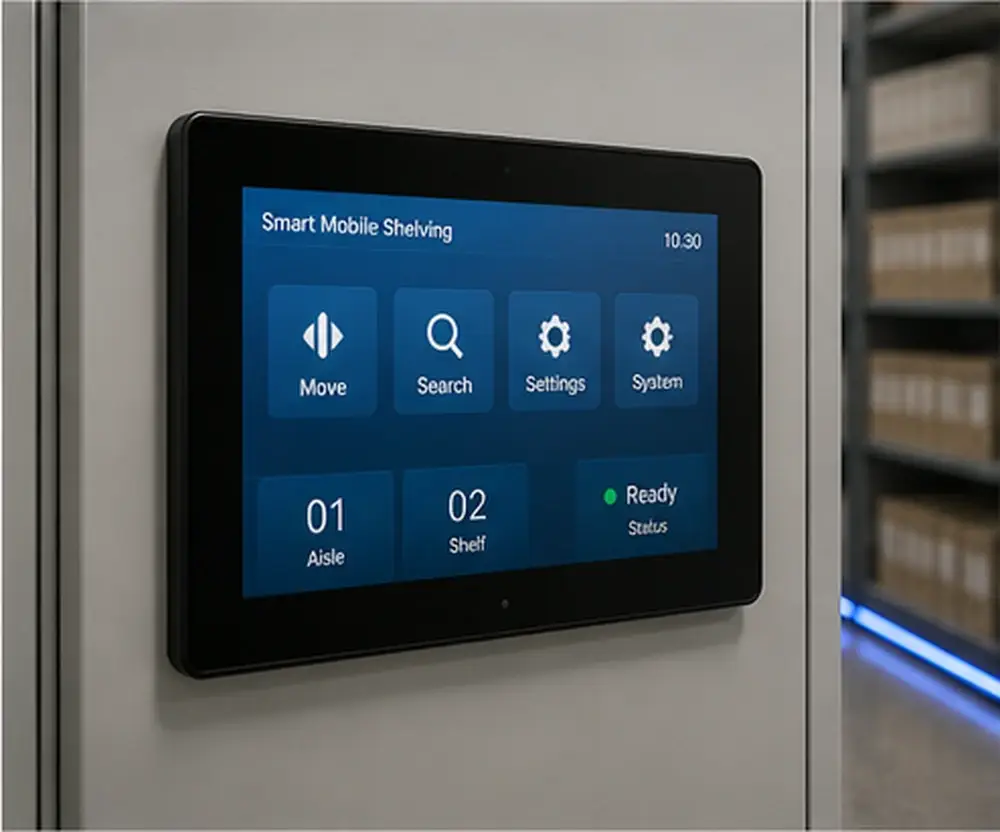
RFID planning should be reviewed with the actual storage arrangement. The reader position, aisle access, cabinet layout and operator interface all affect how reliable and maintainable the workflow will be. SAS can review the information layer together with mobile shelving and archive storage planning.
How a project is developed
Information needed for a preliminary review
RFID archive management FAQ
Does every archive need RFID?
No. RFID is most useful where identification, movement or custody events create a real operating requirement. A smaller archive may achieve the required control with structured labels, clear locations and disciplined procedures.
Can RFID identify both an item and its storage location?
It can be planned as separate identity levels, but the item-to-location relationship and the event logic must be defined. The system should not assume that a read automatically proves the exact final location without reviewing the physical setup and workflow.
Can RFID be added to existing mobile shelving?
It may be possible, subject to the existing control points, room layout, storage unit format, access route and approved interface scope. A site review should confirm compatibility before procurement.
Will RFID replace the archive management system?
RFID is an identification and event layer. It does not replace classification, retention, permissions, document records or the owner’s broader information-management responsibilities.
What happens when a tag cannot be read?
The operating design should include a manual exception route, inspection responsibility and a method to correct the record. Read failures should be treated as a planned operating case, not an invisible edge condition.
Who owns the data after handover?
The archive owner and project team should agree who maintains item data, locations, user permissions, devices, interfaces, backups, training and audit procedures before the system is accepted.
Define the right identification scope
Share the room plan, archive workflow and collection structure. SAS will help determine whether RFID adds measurable value and how it should connect to the physical archive project.